
What’s happening in live entertainment right now? A look at the productions and formats transforming the industry on a global scale.
You’re in Los Angeles. You walk into a hospital. There are no doctors, no patients, and the walls are no longer white. There is art: large-scale works flooding the different spaces, reshaping them as color spills across walls and hospital beds. Seventy contemporary artists, eight emotions — joy, love, fear, anger, hope, sadness, gratitude and resilience — and multiple artistic formats.
Hospital of Emotions has opened its doors with the intention of inviting visitors to experience a familiar space through an entirely different lens. Through visual art, installations, architecture, illustration and scenography, the experience seeks to provoke new connections with the visitor’s inner world and a deeper awareness of the emotions embedded within the environment itself.
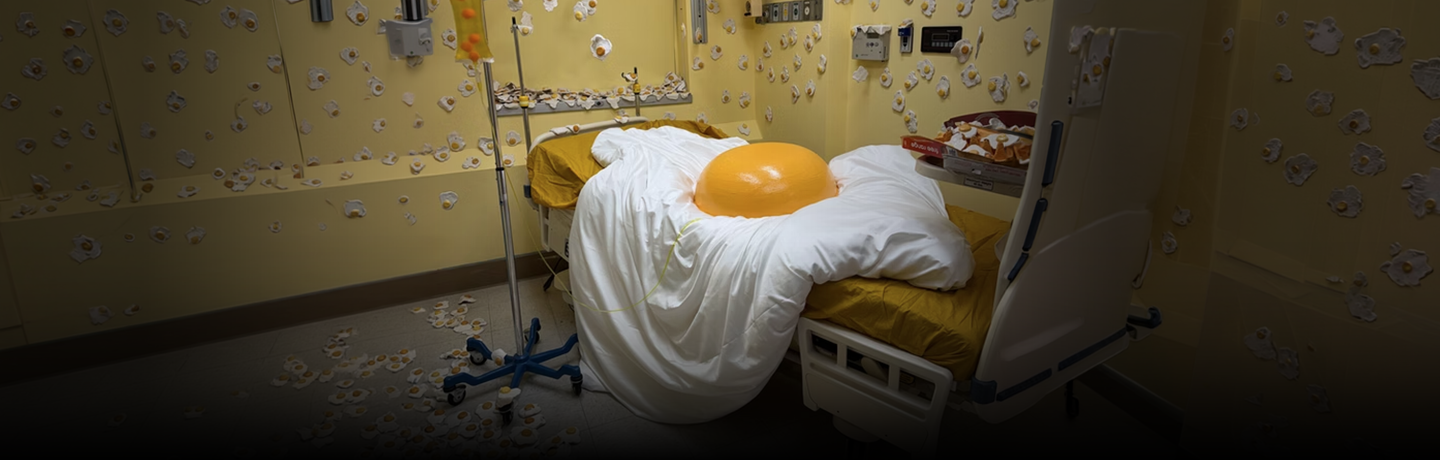
Melan Allen’s installation at Hospital of Emotions, an immersive experience that transforms an abandoned hospital into an emotional and artistic journey. Credit: hospitalofemotions.com
This is precisely one of the strongest premises of contemporary entertainment. The return to classics, recognizable universes and emotionally charged narratives — reinterpreted and reformulated through new formats — speaks simultaneously to two audiences: long-time fans and a broader public increasingly drawn to this kind of cultural experience.
Immersion as a Trend
In this context, perhaps the clearest global trend is the construction of complete worlds the audience can physically inhabit. In Kyoto, Uzumasa Kyoto Village recreates the Edo period at full scale: gambling houses, tea ceremonies and wedding processions transform the entire venue into a living scenario that almost goes unnoticed as performance. In Chicago, The Hand & The Eye occupies five floors of the McCormick Mansion with 37 immersive spaces — theatres, bars, salons, dining rooms and ateliers — where the real spectacle is not a single performance, but the environment as a whole.
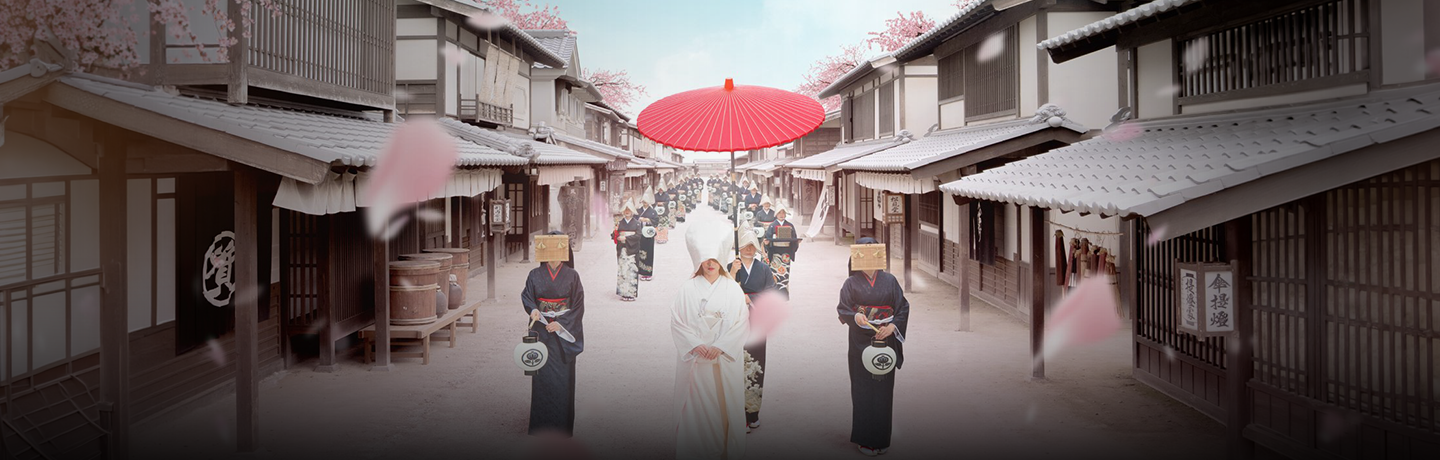
Traditional Japanese bridal procession at Uzumasa Kyoto Village, the immersive Kyoto experience recreating the Edo period at full scale. Credit: www.toei-eigamura.com
The question running through many of these formats is the same: what happens when an experience no longer has a clearly defined beginning and end, but instead functions simply as a place?
That seems to be one of the major shifts in contemporary entertainment. Immersive formats are increasingly used as tools for transporting audiences into alternative realities and activating emotional response.
But where exactly do the boundaries of immersive narrative and immersive space lie? Do they even exist? Immersion now operates less as a genre and more as a language — a way of constructing experiences capable of bringing different artistic disciplines into dialogue with one another. Yet the format alone is no longer enough. It needs a story, an emotion or a shared cultural imaginary capable of creating a genuine connection with the audience. Otherwise, the risk is reducing the experience to a sequence of visual stimuli without emotional permanence.
Trend 1: The Blurring of Boundaries Between Formats
Live entertainment is currently going through a moment that is increasingly difficult to categorize. The boundaries between disciplines are dissolving to the point where traditional labels — theatre, exhibition, concert, installation, theme park — are becoming almost meaningless. Theatre borrows from museum design; exhibitions incorporate dramaturgy; musicals absorb elements from club culture, architecture and immersive cinema; even retail and gastronomy are beginning to operate through narrative logic closer to experience than consumption.
In London, ABBA Voyage removed the physical presence of the band entirely to create a hybrid concert combining live performance, digital avatars and technological simulation. In Las Vegas, Sphere has effectively become a format of its own: screen, architecture and show operating as a single narrative structure. Space itself becomes the experience.
The same approach appears in productions where fiction invades the entire environment. Cabaret, produced by LETSGO in Madrid, is conceived not simply as a theatrical production but as an expanded scenic experience. Audiences enter the Kit Kat Klub before even reaching their seats: tables integrated into the stage, performers moving among spectators, live music and a spatial configuration that removes the traditional distance between audience and fiction. The performance no longer happens “in front” of the audience — it happens around them.
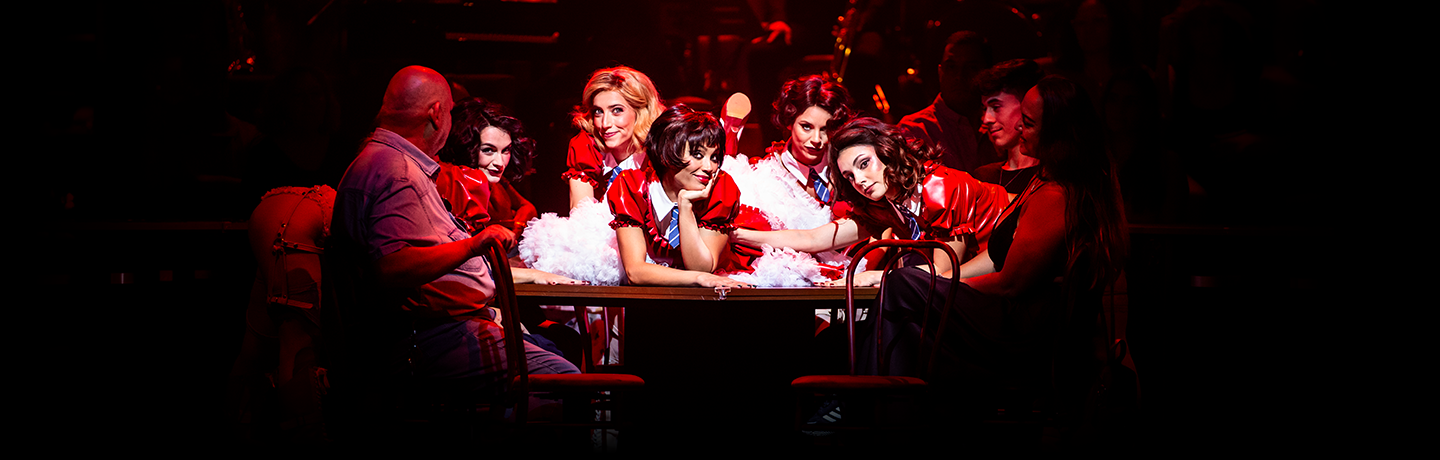
LETSGO’s production of Cabaret in Madrid, where the theatre transforms into the Kit Kat Klub and fiction fully takes over the space. Photo: LETSGO
Perhaps this constant blending of languages is one of the clearest transformations within the sector today. Contemporary entertainment seems increasingly uninterested in defending pure formats, leaning instead toward spaces that function simultaneously as spectacle, installation and social environment.
Trend 2: Space as Narrative Core
For decades, space functioned primarily as support. A theatre housed a play; a warehouse housed an exhibition; a museum housed a collection. Today, in many international projects, architecture itself becomes part of the narrative.
The rise of site-specific experiences reflects precisely this shift. It is no longer simply about intervening in a space, but about constructing a narrative inseparable from it. In New York, Sleep No More transformed the McKittrick Hotel into a labyrinthine reinterpretation of Macbeth: rooms, hallways, staircases and salons functioned as narrative fragments audiences explored freely. The story was discovered physically.
In Santa Fe, Meow Wolf’s permanent installations combine science fiction, contemporary art, tunnels, supermarkets and interactive architecture to create something closer to a navigable universe than a traditional exhibition.
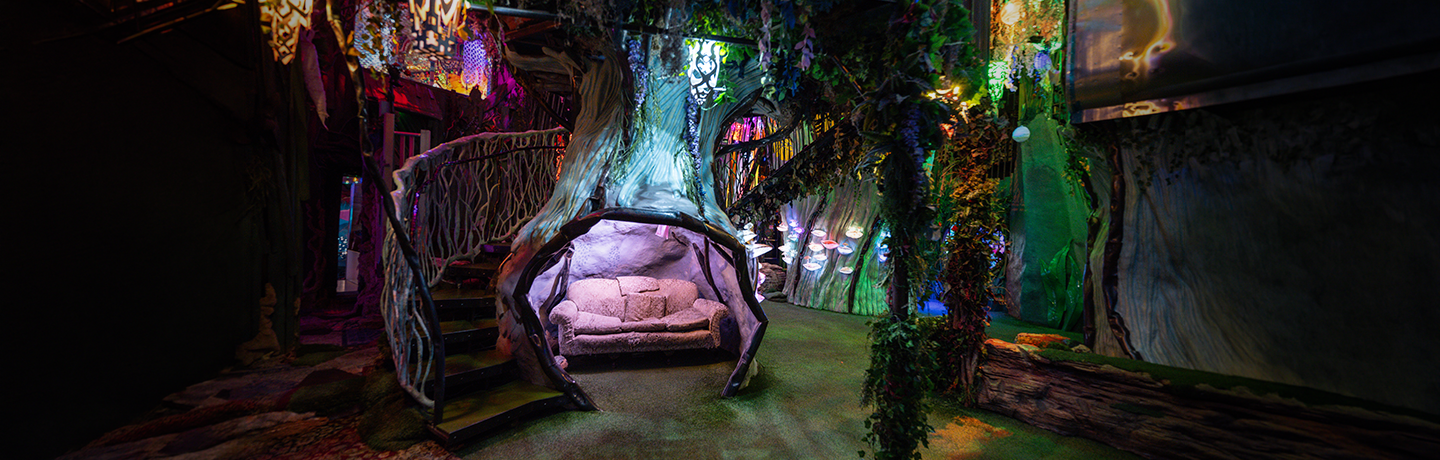
The Forest, one of Meow Wolf’s permanent installations in Santa Fe, where art, architecture and immersive storytelling merge into a navigable universe.Credit: meowwolf.com
This tendency also runs through many of LETSGO’s productions. Tim Burton’s Labyrinth uses spatial structure itself as a narrative engine: doors, branching paths and decisions turn each visitor’s route into a different experience. Audiences move literally through Burton’s visual imagination, crossing spaces that function as physical extensions of his cinematic universe.
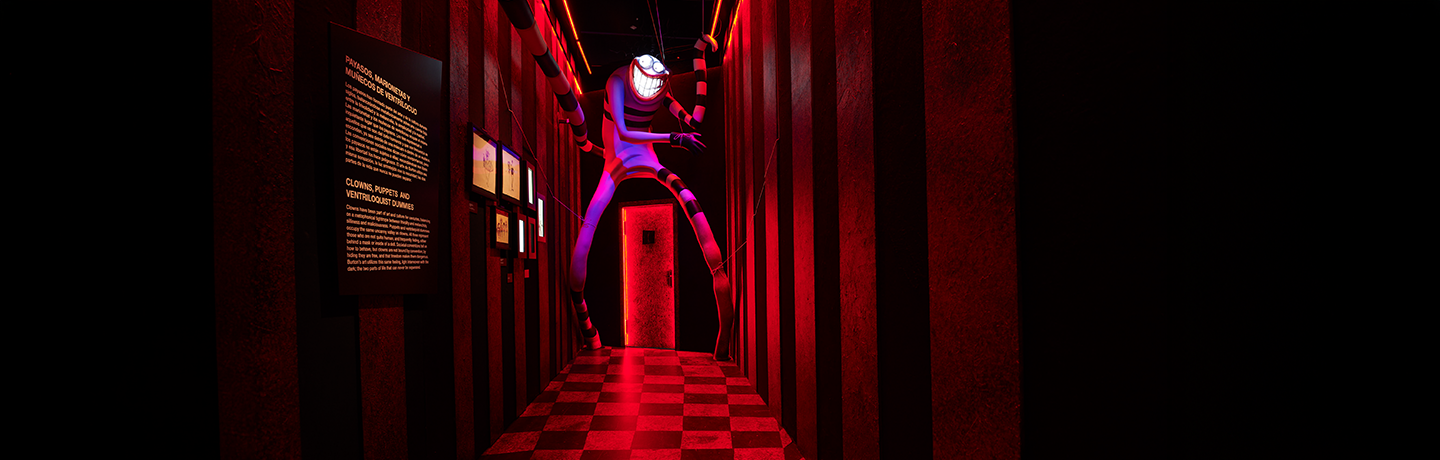
Tim Burton’s Labyrinth, LETSGO’s immersive experience transforming the director’s visual universe into a physical journey of branching paths, cinematic worlds and surreal environments. Photo: LETSGO
Trend 3: The Expansion of Intellectual Properties
The growth of immersive entertainment has also transformed the way major cultural franchises relate to physical space. Film, television, gaming and music no longer end at the screen; they expand into experiences capable of extending their narrative worlds beyond their original medium.
In Shanghai, the Harry Potter Studio Tour transforms sets, creatures and filmmaking processes into a multi-hour physical journey where the experience consists of inhabiting the saga’s universe.
This trend extends across experiential entertainment globally. The FRIENDS Experience and Stranger Things: The Experience both rely on a similar principle: activating the audience’s emotional familiarity and translating it into physical permanence. Immersion becomes immediate because the imaginary already exists within collective memory.
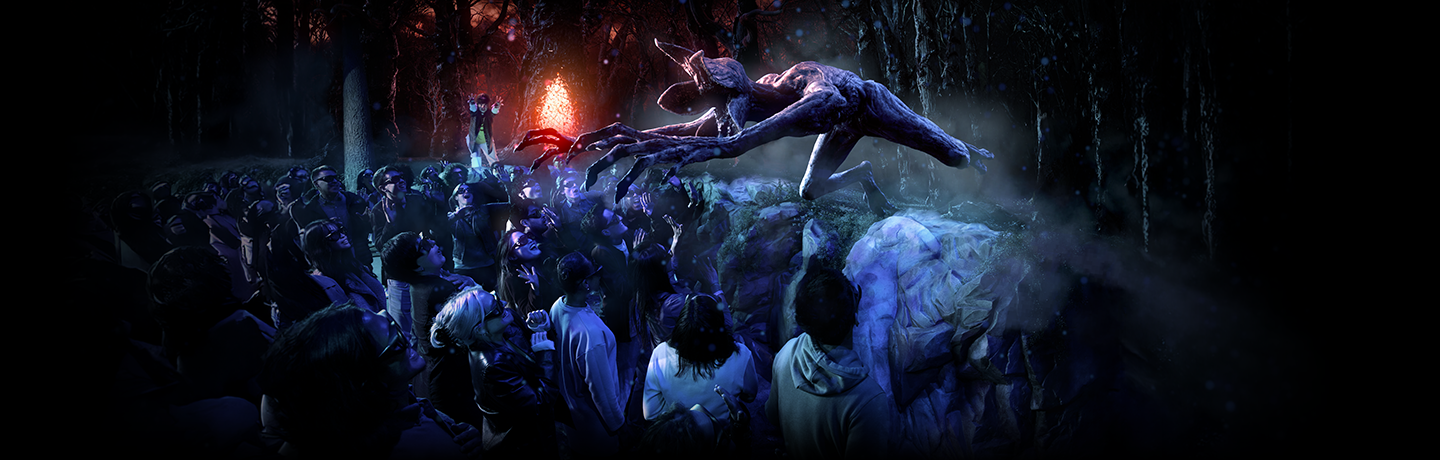
Stranger Things: The Experience, the immersive experience inspired by the Netflix series, bringing Hawkins into the physical world through interactive storytelling, large-scale sets and instantly recognizable references for fans. Photo: LETSGO
Trend 4: The Musical as an Expanded Experience
Musical theatre is also undergoing a significant transformation. For decades, the Broadway and West End model operated through a relatively stable structure: frontal staging, a clear separation between audience and fiction, linear storytelling and a spatial experience contained within the traditional theatre format.
Many contemporary productions are beginning to challenge that structure.
The rise of immersive formats, experiential design and the influence of visual languages drawn from cinema, concerts, installations, club culture and digital art have transformed the way musicals construct their relationship with both space and audience.
In New York, Masquerade reimagines The Phantom of the Opera as a multi-floor performative journey where small groups move through intimate scenes just inches away from performers. The narrative itself does not change physically — but the way audiences inhabit it does, fundamentally altering the emotional perception of the story.
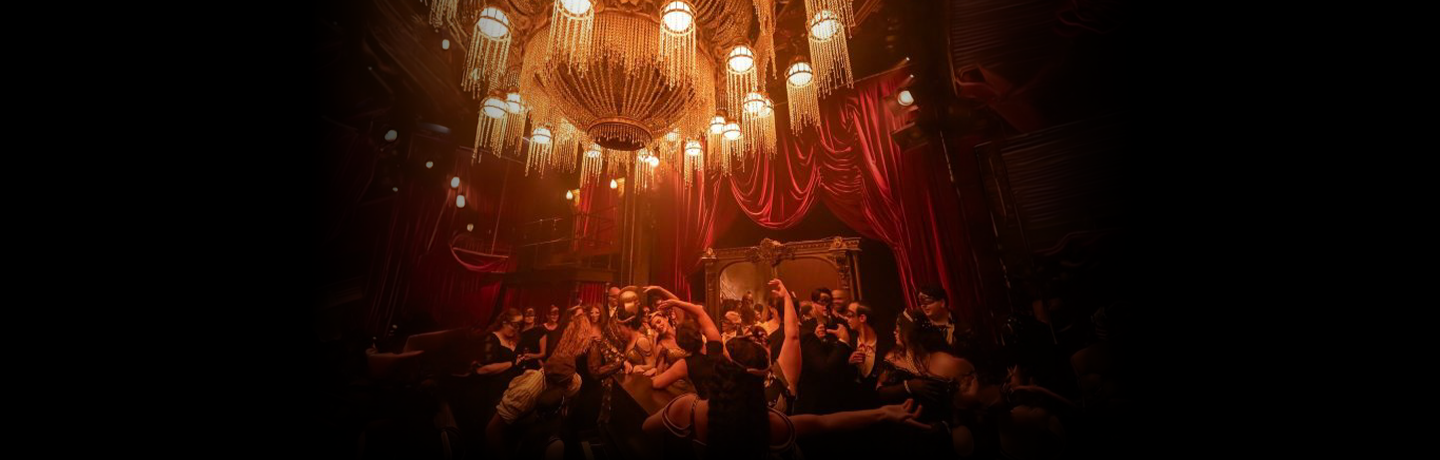
Masquerade, the immersive reinterpretation of The Phantom of the Opera in New York, transforms the musical into a performative journey where audiences move through the fiction just inches away from the performers. Credit: masqueradenyc.com
A similar transformation appears in new productions of Cabaret, where the theatre stops functioning merely as scenery and becomes an active club environment in which music, performers and audience share the same atmosphere. The experience begins before the performance itself and extends beyond it.
Yet the transformation of musical theatre is not limited to immersion alone. It is also visible in the visual and technological scale of contemporary productions. In shows such as Starlight Express in London — as well as newer stage adaptations driven by artificial intelligence, automation and digital design — the stage increasingly behaves like a dynamic system of moving images.
Even seemingly traditional musicals are beginning to absorb the logic of concerts, premium experiences and social events. Theatre is no longer simply a place of representation; it becomes a broader experience of atmosphere and permanence.
Trend 5: The Silent Spectacle of Technology
Technology remains one of the major driving forces behind contemporary entertainment, though its role is beginning to shift. For years, much of the industry built experiences where the technical device itself was the visible center of the spectacle: monumental projections, screens, virtual reality and interactive effects.
Today, many productions appear to be moving in the opposite direction. Technological sophistication continues to grow, but increasingly integrated into the experience itself until it becomes almost invisible.
In South Korea, d’strict’s installations transform entire urban facades into large-scale digital illusions capable of temporarily altering the architectural perception of public space.
The focus is no longer on displaying innovation, but on creating emotional credibility.
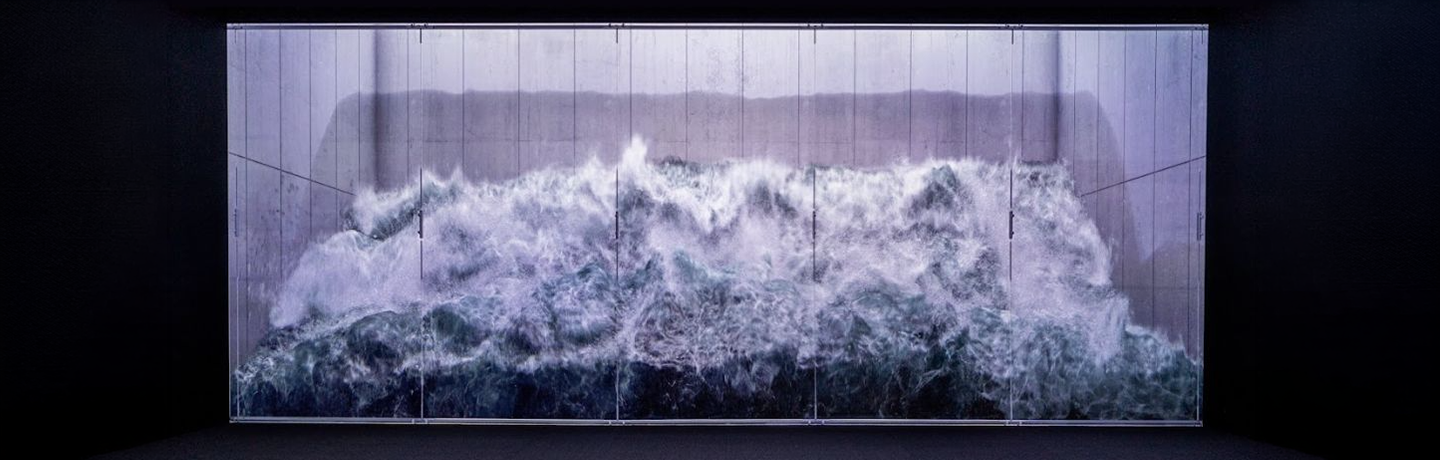
Wave, d’strict’s digital installation transforming an urban façade into a massive ocean illusion through immersive technology and visual architecture. Image courtesy
In Jurassic World: The Experience, technology operates precisely through that invisibility. Animatronics, spatial sound, lighting and environmental design do not function as isolated technical demonstrations; they work together to sustain a physically believable fiction throughout the experience.
Perhaps one of the most interesting paradoxes of today’s entertainment landscape is this: the more sophisticated technology becomes, the less it needs to reveal itself.
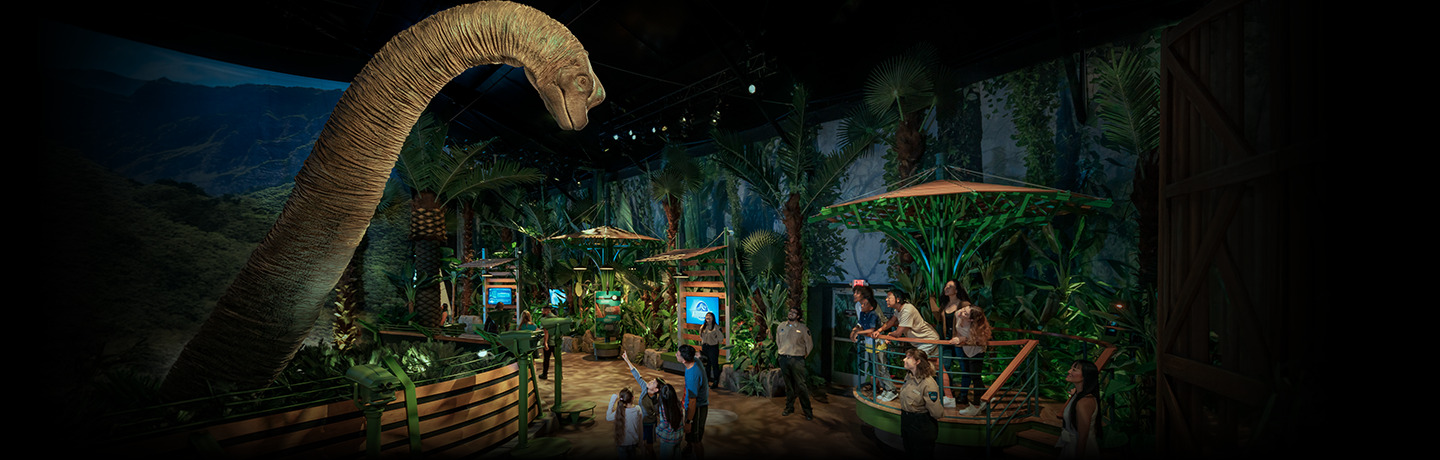
Jurassic World: The Experience highlights the role of technology in the growth of immersive live entertainment as a new cultural standard. Photo: LETSGO
Live entertainment is currently undergoing a transformation too broad to be reduced to a single trend. Boundaries between disciplines are dissolving, intellectual properties are leaving the screen behind to occupy physical space, and architecture itself is beginning to function as narrative.
Immersion no longer appears simply as a format, but as a transversal language capable of moving across theatre, music, exhibitions, gastronomy and experiential entertainment.
Perhaps that is where the industry’s real shift lies: in the construction of spaces designed to envelop audiences and allow them, temporarily, to step outside their immediate reality.
By the LETSGO Pen, Claudia Pérez Carbonell, on May 29th, 2026