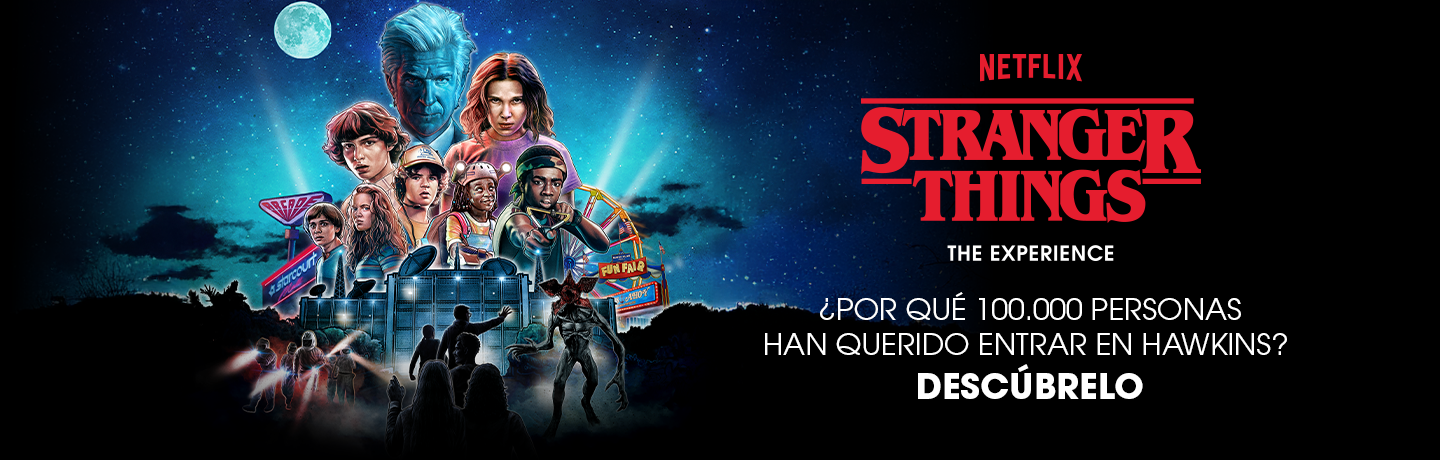

The immersive experience has surpassed 100k tickets sold during its run in the Mexican capital.
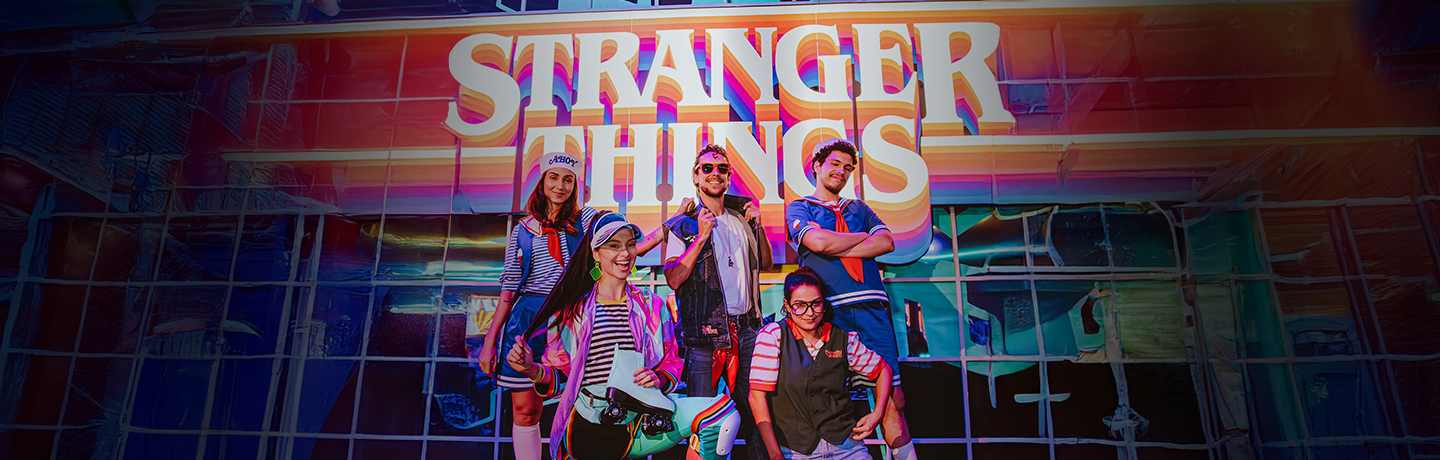
Since opening on December 13, 2025, at Expo Reforma —2,500 square metres in the heart of Colonia Juárez— Stranger Things: The Experience has reached six figures in attendance in Mexico City. Before arriving there, it had already played New York, London, Paris, Toronto, Sydney, Rio de Janeiro, São Paulo, Los Angeles, San Francisco, Atlanta and Seattle. It has now landed, brought by Netflix, Fever, Blast Entertainment, DC Set and LETSGO, in a market particularly receptive to large-scale live formats: a city as used to spectacle as it is to turning it into a social plan.

Entering Hawkins
Stranger Things: The Experience places visitors inside a new story —created specifically for this format— set within the universe of the series. It asks something different from passive consumption: participation.
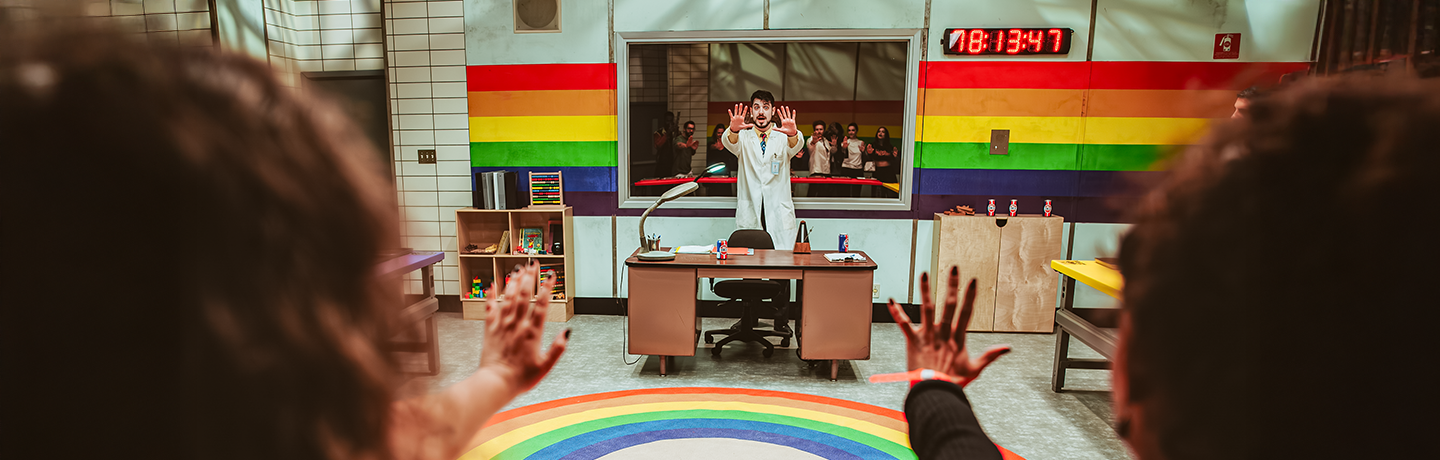
The experience is built around two distinct components. The Walking Tour is a timed, guided route that runs across two parallel and identical tracks, starting and ending simultaneously. Visitors move through five consecutive immersive zones —Orientation Room, Rainbow Room, Systems Analysis, Control Room and the Upside Down— built around a premise any fan will recognise: an experiment at Hawkins Lab that, predictably, goes wrong.
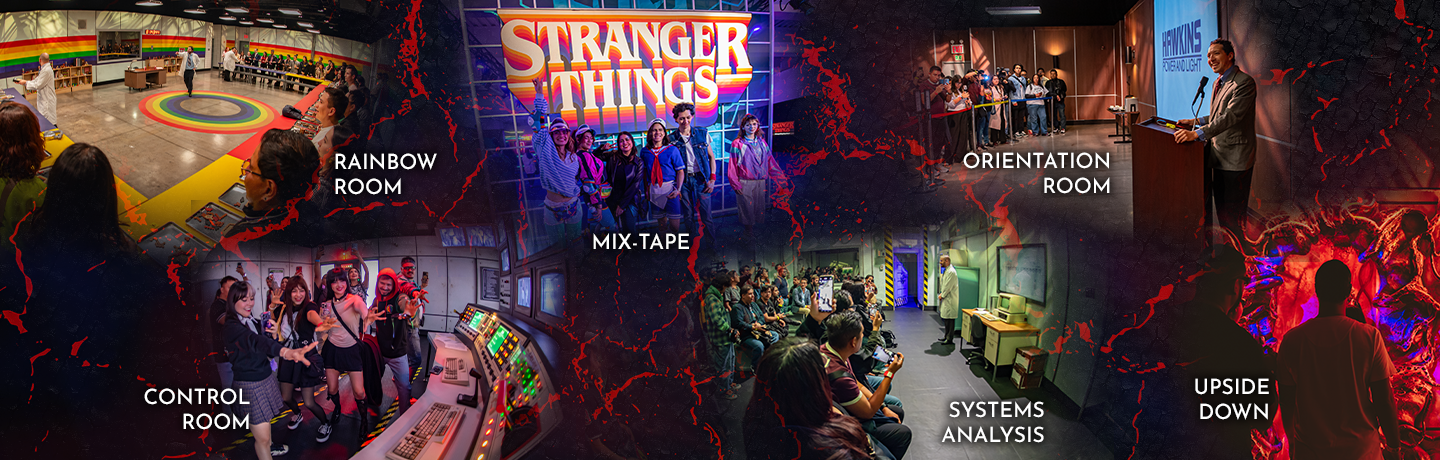
Live actors, special effects, immersive sound and projections sustain a roughly 45-minute narrative with a clear objective: stop Vecna.
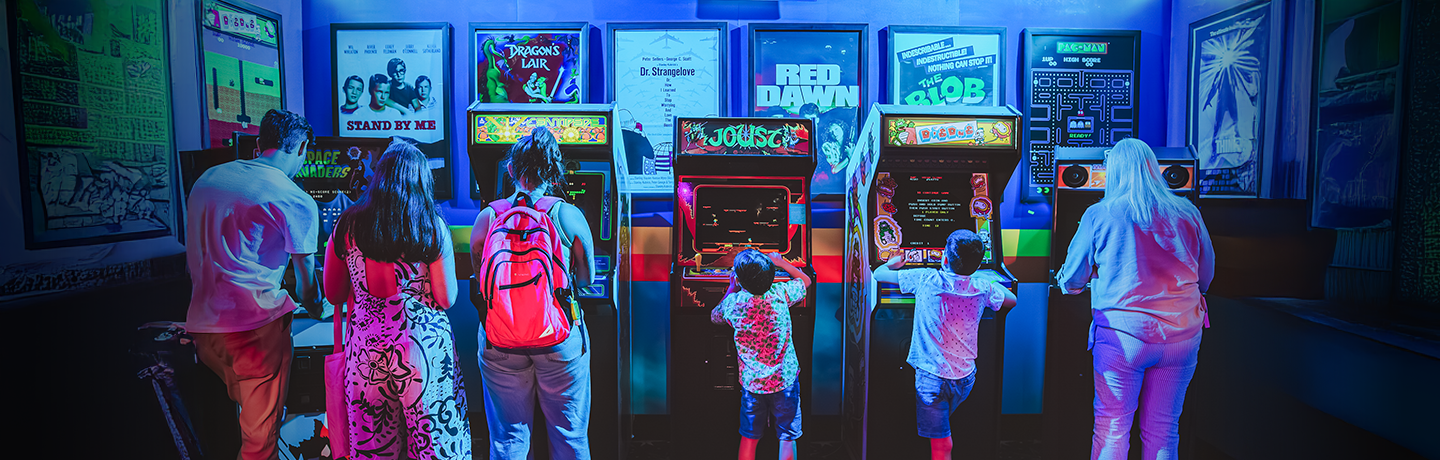
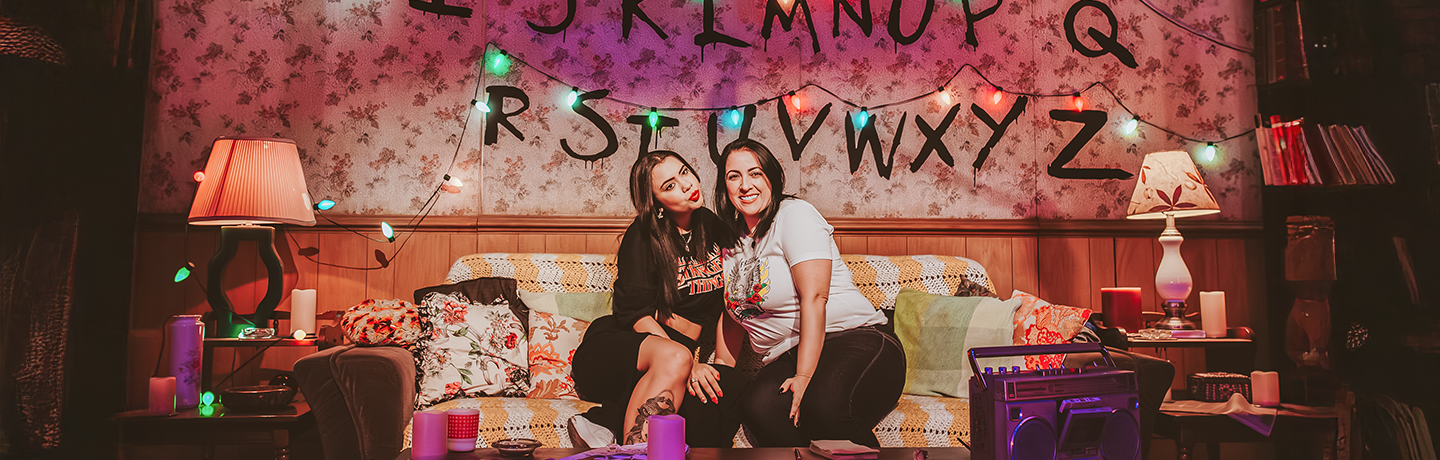
Beyond the Walking Tour, and toward the final stretch of the visit, comes the Mix-Tape: a free-flowing zone —no schedule, no guide— conceived as a neon tribute to the 1980s. Steve and Robin’s Scoops Ahoy, the Palace Arcade, the Byers’ living room with its Christmas lights, Surfer Boy Pizza. Themed food and drinks, merchandise, music from the decade. It is the space —unmistakably eighties, of course— where dramatic tension dissolves and the experience shifts from storytelling into leisure.
The Nostalgia of a Past Era
Why have 100,000 people wanted to enter Hawkins? The popularity of the show and the attention generated by its final season are obvious factors. But there is something more specific behind the phenomenon: over the course of a decade, Stranger Things built an eighties nostalgia that demanded to become more than a narrative device. It turned into a familiar aesthetic, capable of awakening the desire to return —or to arrive there for the first time. Immersion is the final expression of that impulse: if the series made viewers feel inside the eighties, the experience now allows them to live them physically.
Stranger Things does not recreate the historical 1980s, but a synthesised version filtered through decades of pop culture: bicycles at sunset, arcades, shopping malls, synthesisers, American suburbs and supernatural threats. A stylised past, instantly recognisable even to those born long afterwards. The Mix-Tape is the clearest demonstration of that logic. It is not merely a leisure zone, but the materialisation of that era.
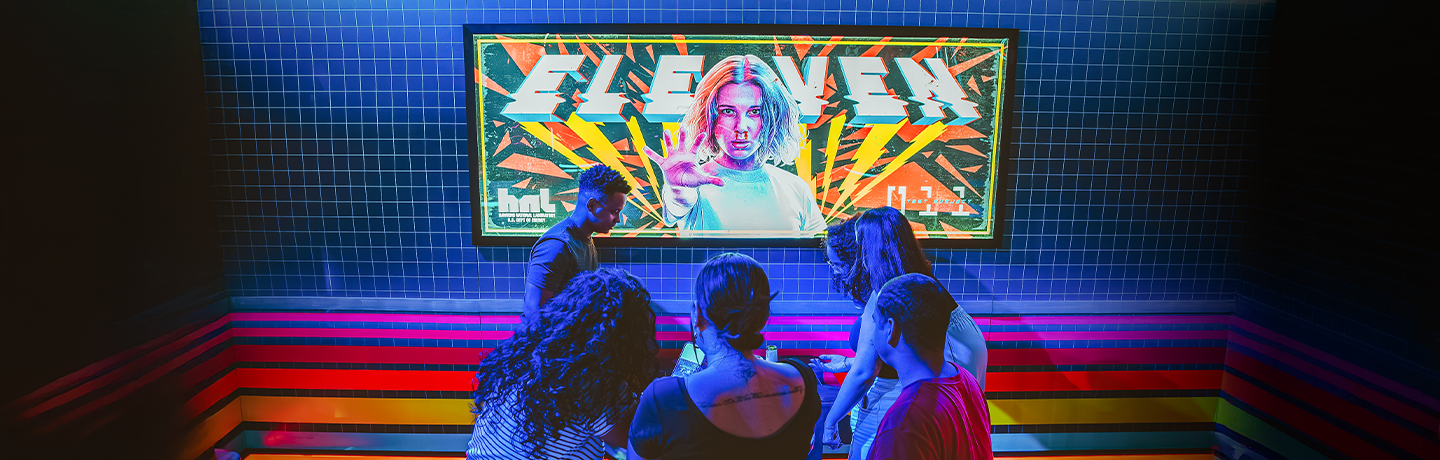
That mechanism reveals something important: the eighties nostalgia represented by Stranger Things belongs less to those who lived through the decade than to those who learned it through screens. That turns it into a shared memory that does not need to be personal in order to generate emotional connection.
Belonging to Another Time
There is also a generational reading of the phenomenon. Part of the appeal of these worlds lies in a desire to escape a present perceived as unstable, accelerated and saturated with stimuli. Against that backdrop, the 1980s function less as a historical period than as a symbolic refuge: a time imagined as more legible, more communal and governed by apparently simpler codes.
What people seek is not so much a return to a real past as the chance to inhabit a different temporal fiction. In that aspiration to belong to another era — even one never actually lived —lies one of the emotional keys to its success.
The immersive format —which we have discussed on this blog before— is the ideal vehicle for that kind of nostalgia because it offers the spectator the closest thing to inhabiting a time that already feels distant or blurred. In the meeting point between global IP, experience design and constructed cultural memory lies much of the explanation for why this model works in every city it reaches.
By the LETSGO Pen, Claudia Pérez Carbonell, on April 30th, 2026.