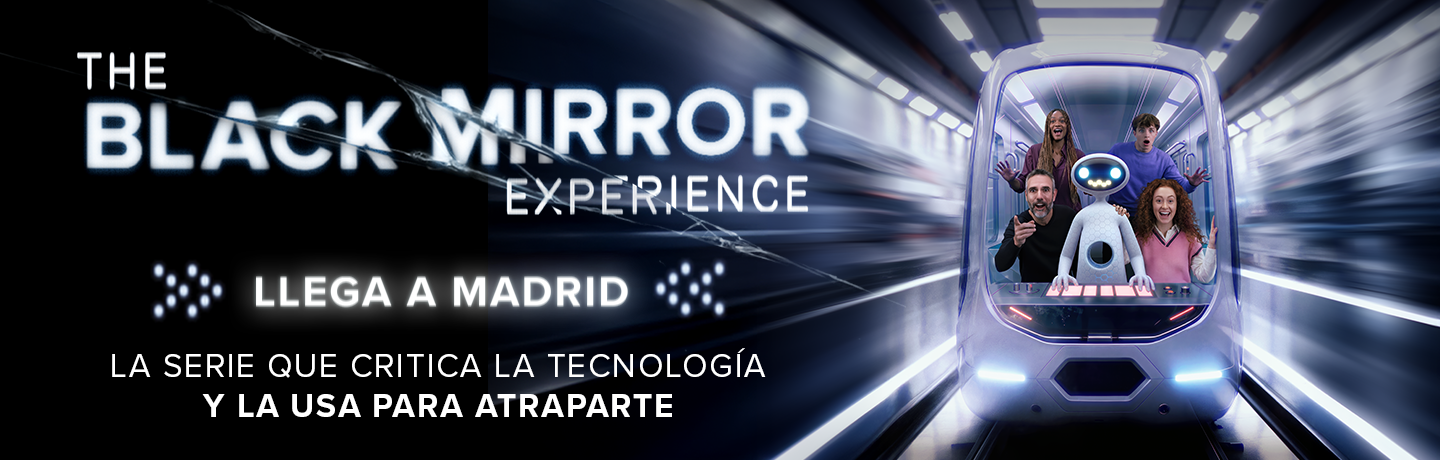

The immersive production based on the Netflix series, recognised at Cannes 2026, is now open at Espacio Delicias.
For more than a decade, Black Mirror® has warned us about the dangers of placing too much trust in technology.
It has shown us worlds where invisible algorithms shape our relationships, artificial intelligences know us better than we know ourselves, and systems designed to make life easier gradually exert a quiet control over it.
Now, for the first time, the series is no longer asking us to watch those futures from behind a screen. It is inviting us to step inside them.
On 4 June, The Black Mirror Experience™ opened its doors at Espacio Delicias, making Madrid the first European stop for the immersive production following its debut in Montreal. The opening brought together media, content creators and cultural industry guests to discover a project that blends physical environments, virtual reality and interactive storytelling within the universe of one of the most influential television series of the last decade.
But to understand why this experience is so compelling, it is worth starting with a more fundamental question.

What is Black Mirror?
Created by Charlie Brooker in 2011, Black Mirror® is a dystopian science-fiction anthology in which every episode tells a self-contained story. There are no recurring protagonists and no overarching narrative. What connects these stories is a shared obsession: exploring how technological progress can reshape the way we live, relate to one another and understand ourselves.
Unlike more speculative science fiction, the series rarely imagines distant futures. Its stories unfold in recognisable versions of our present, only a few steps ahead of reality. That is precisely why they feel less frightening than unsettling: they do not describe what might happen someday, but what is already beginning to happen now.
Even the title points in that direction. According to Brooker, the “black mirror” refers to the dark screens of our phones, computers and televisions when they are switched off: reflective surfaces that, once they stop displaying images, return our own reflection.
The focus has never really been on technology itself. It is on what technology reveals about us: our dependence on digital devices, our endless search for validation, the privacy we willingly trade for convenience, and the increasingly blurred line between our own decisions and those made by the systems we rely on every day.
That is exactly where The Black Mirror Experience™ begins.
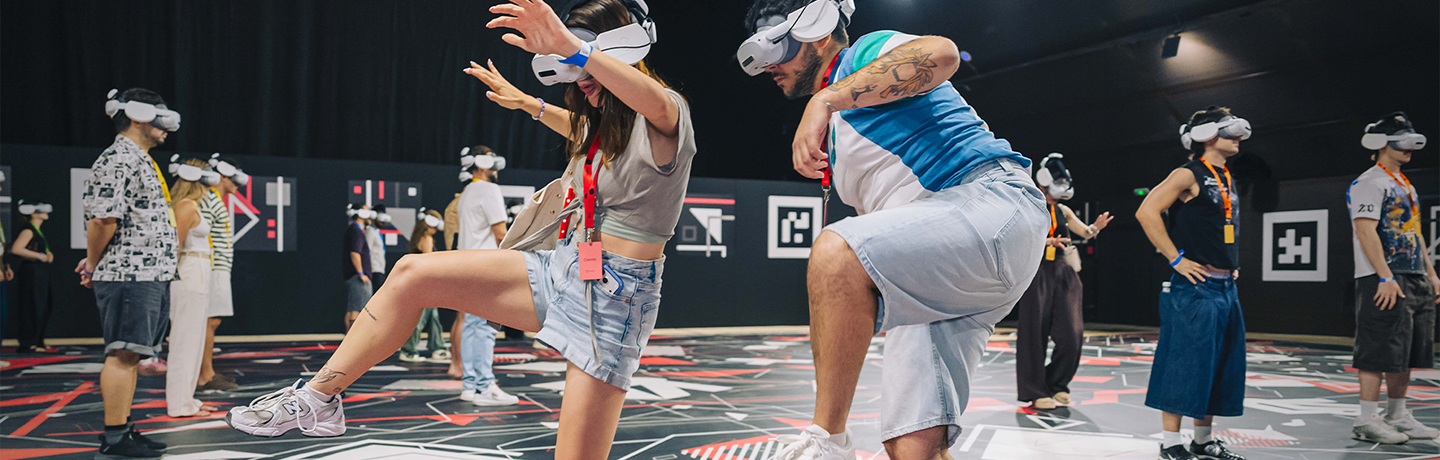
A familiar invitation
The experience opens with the introduction of LifeAgent, a product developed by the fictional technology company Phaethon: an artificial intelligence designed to know you better, anticipate your needs and help you become the best version of yourself.
It is a familiar promise.
In fact, it could be the launch pitch for almost any productivity app, voice assistant or digital wellness platform released in recent years.
The experience chooses this starting point very deliberately. Rather than asking visitors to watch a fictional character trade privacy for convenience, it asks them to make that choice themselves.
The question is no longer what someone else would do.
The question is what we would do.
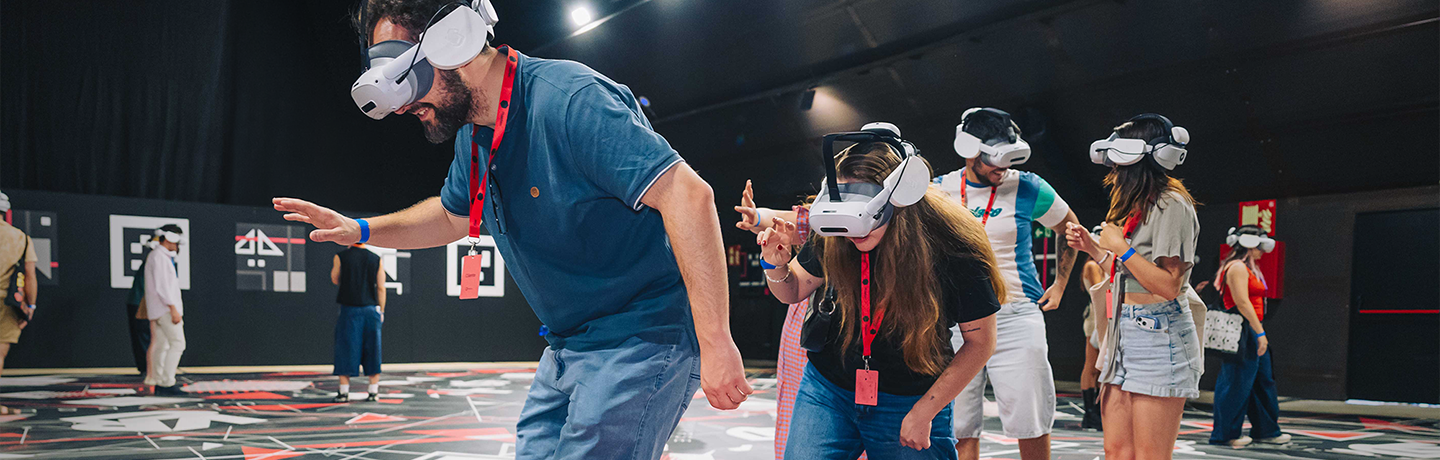
Inside Phaethon
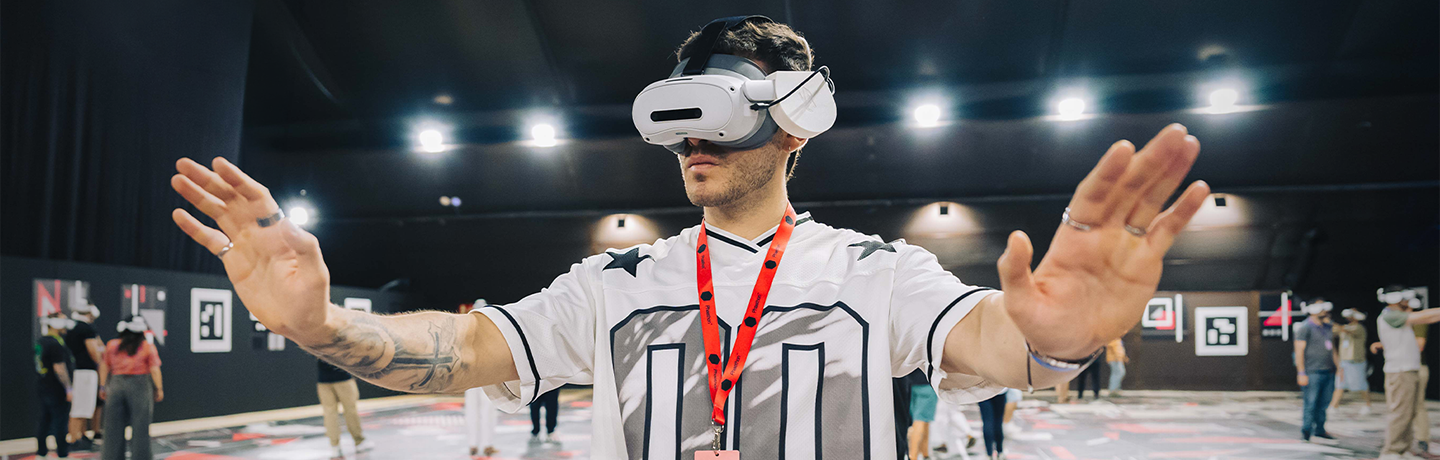
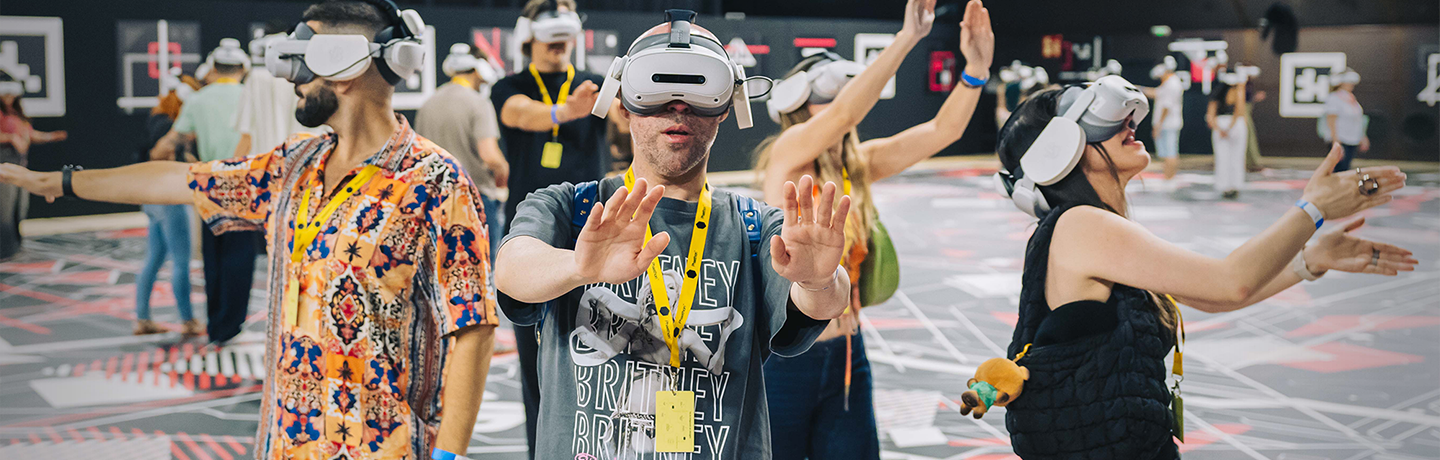
Visitors move through Phaethon’s showroom in groups of up to six people, encountering unexpected twists, surrendering biometric data and making decisions that shape the course of the story.
The opening section plays out like a technology company’s exhibition from the near future: photographs, timelines and environmental storytelling pieces construct the narrative of Phaethon from its origins, all delivered with the peculiar blend of inspiration and unease that has become a hallmark of the series.
The turning point arrives when the experience deploys its most precise dramatic device: a robot capable of replicating the visitor’s own face and voice.
Not a character’s.
Yours.
It is perhaps the most coherent storytelling choice the creators could have made: a mirror that reflects an image too accurate to ignore and too strange to feel comfortable.
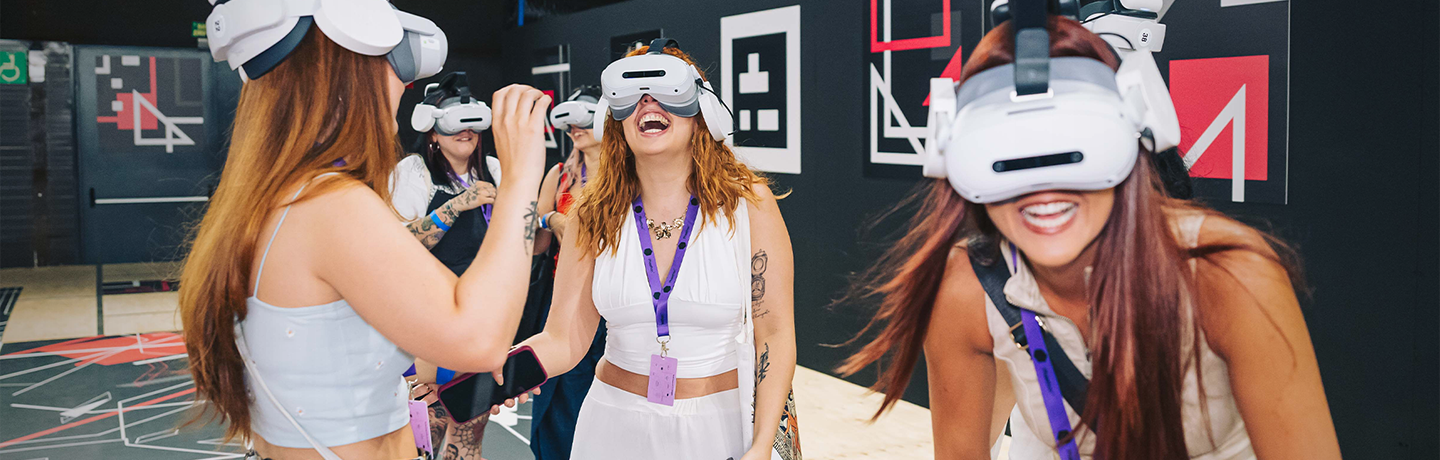
Over the course of 60 minutes, the experience moves from physical staging into fully immersive territory. It is not an escape room, nor is it theatre. It occupies a format that still lacks a universally accepted name, and that ambiguity is part of what makes it relevant. It points towards a space that experiential entertainment is only beginning to explore.
The people behind it
The Black Mirror Experience™ is produced by Banijay Live Studio — the live entertainment division of Banijay Entertainment, which owns the rights to the series — in collaboration with Univrse, the Barcelona-based virtual reality studio behind the technology. LETSGO serves as the local producer responsible for the Madrid premiere.
The project also arrives with credentials from one of the most demanding cultural validation circuits in the world: the 2026 Cannes Immersive Competition, where The Black Mirror Experience™ received a Special Jury Mention.
This is no minor distinction. It was one of only nine projects selected to compete, alongside productions from Portugal, Italy, South Korea and France.
Tristan Desplechin, Director of Banijay Live Studio, described the challenge succinctly:
From the outset, we wanted to create an experience that remained true to the core of Black Mirror® while standing on its own as a story. This recognition at Cannes demonstrates that bringing a screen-based universe into an immersive format is not simply adaptation — it is a creative discipline in its own right.
Madrid, the first European stop on a global tour
The world premiere took place in Montreal on 21 May. Madrid followed on 4 June, while New York is scheduled to open on 20 June at The Shed.
Three cities in less than two months reveals the pace of expansion for a project that was clearly never conceived as a local installation.
The fact that Madrid was chosen as its European debut says something about the changing geography of experiential entertainment across the continent.
Since opening in 2021, Espacio Delicias has welcomed more than two million visitors and has established itself as a venue capable of combining large-scale international productions with an urban audience that increasingly understands and embraces immersive formats.
The Black Mirror Experience™ is now open at Espacio Delicias from Wednesday to Sunday.
You do not need to have seen the series to enjoy it.
But it may help if, at least once today, you have stopped to think about how much of your data you have already given away before arriving.
By the LETSGO Pen, Claudia Pérez Carbonell, on June 9th, 2026.