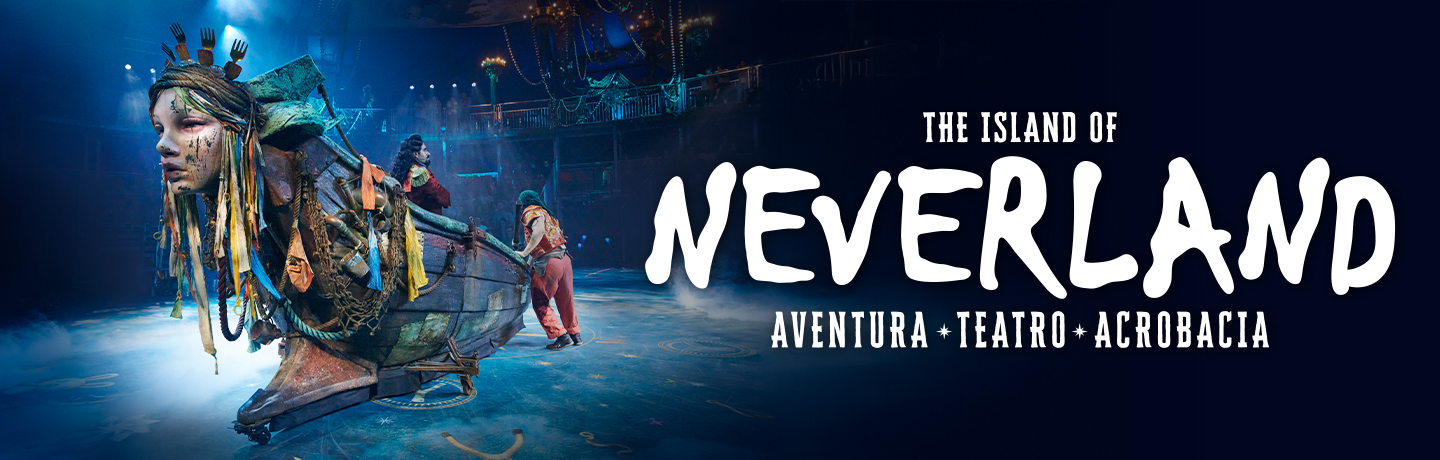

Acrobatics, physical theatre, music, set design and costume all shape the language of The Island of Neverland, a new story set within a world we already know.
Neverland is undoubtedly one of those places we feel we have always known. We know that pirates, fairies and lost children live there. That there is a captain called Hook. That flying is possible and that growing up, perhaps, is not inevitable. It is an imaginary world that has lived in our collective memory for generations and, precisely because of that, returning to it means facing a question: how do you tell something new inside a world everyone thinks they already know?
That is one of the questions running through The Island of Neverland, the new production by LETSGO and Balich Wonder Studio, which premiered on 1 October at Espacio Delicias and offers a new way of stepping into this universe.
The answer begins with Tempesta.
She is the new character who guides the audience through this version of Neverland. Her story enters that familiar world to propose a different journey: that of a young woman faced with decisions about who she is, who she wants to become and what she is willing to leave behind.
For Simone Ferrari, director of the show alongside Lulu Helbek, working with such a recognisable world is both an opportunity and one of the project’s main creative challenges.
Audiences arrive with expectations. They expect to find Peter Pan, Hook and the Lost Boys. The challenge, then, is to play with those familiar references while introducing new characters, conflicts and elements that expand the world of Neverland.
But there is another unexpected twist: this new story is told almost entirely without words.
The Language of the Body
How do you build a dramaturgy without relying on dialogue?
Here, acrobatics, dance, performance and physical theatre become different tools within the same language. Lulu Helbek compares it to creating a graphic novel: if, in a panel, drawing, composition and gesture allow us to understand what is happening, here it is movement, intention, music and the relationship between performers that move the story forward.
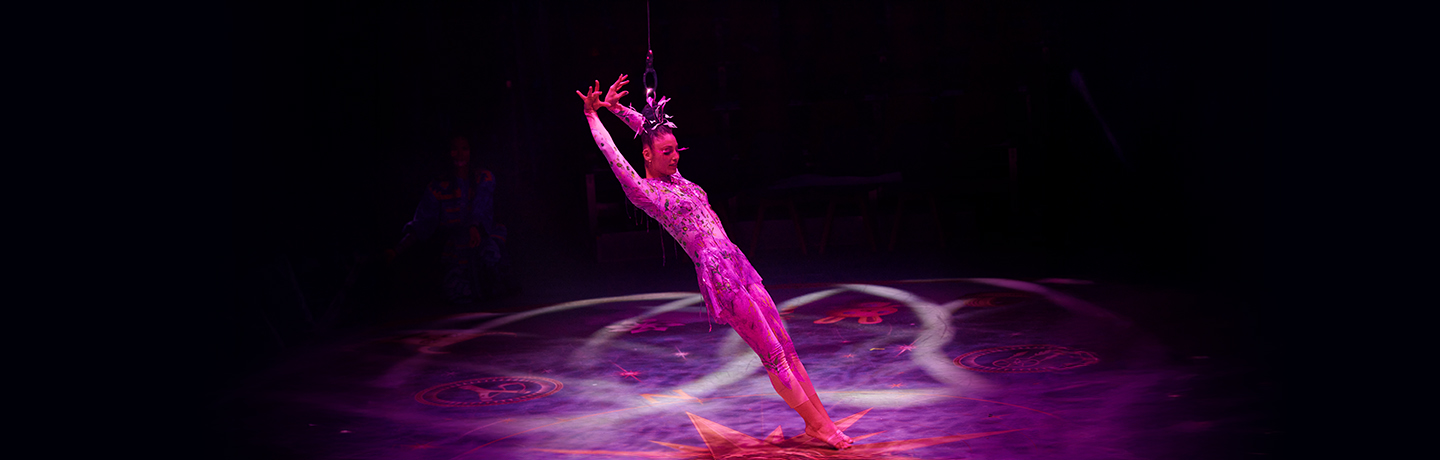
Acrobatics, therefore, are central to the storytelling.
That idea is fundamental for Edesia Moreno, choreographer and acrobatic designer, who is responsible for building what she describes as the show’s “acrobatic skeleton”. Her work begins long before each individual act is created: it involves deciding which disciplines can exist within this Neverland and, above all, why they should be there.
Every movement has to respond to the character performing it, to the moment in the story and to the visual world they belong to. From that process comes a combination of disciplines including high wire, Chinese pole, trampwall and swinging trapeze, among other highly precise techniques.
This is also the territory of Gavin Maxwell, movement director, who has spent more than fifteen years working in physical theatre. During the creative process, actors, dancers and acrobats worked together to build a shared physical vocabulary and avoid an obvious separation between “the dance moment”, “the theatrical moment” and “the acrobatic act”.
An acrobatic movement can emerge from a character’s personality. A choreographic sequence can borrow from circus language, and performance can gradually turn into dance.
It all belongs to the same language.
The Story Begins Before You Sit Down
From the very beginning of the creative process, Ferrari and Helbek were clear that they wanted to build a place to arrive at, not simply a show to attend.
That is why the experience begins before the performance itself.
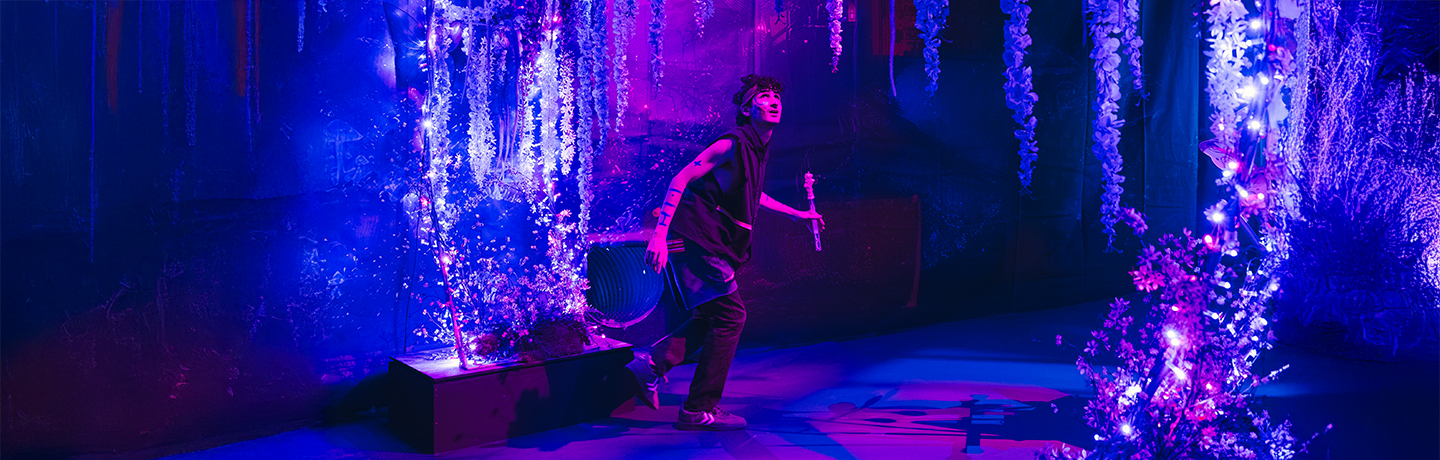
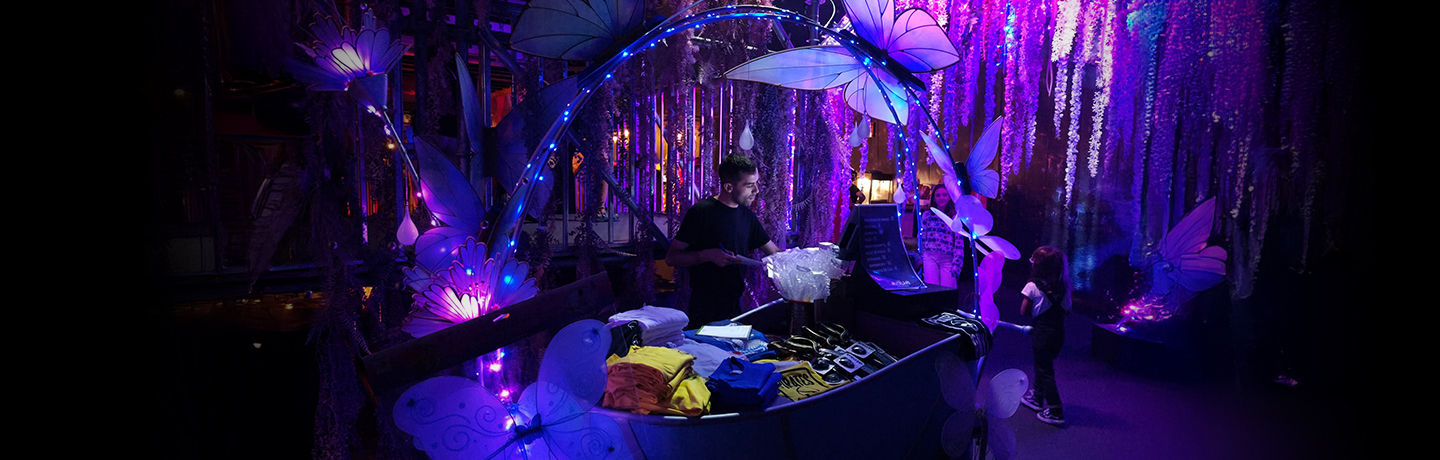
When audiences step through the doors of Neverland, they do not immediately enter a theatre and take their seats. First, they move through the island, encounter its inhabitants and explore different parts of this universe before reaching the space where the main performance unfolds.
Pirates, fairies, lost children and other creatures are part of this initial journey. In a way, the story has already begun.
For Lulu Helbek, that was exactly the idea: Neverland had to function as a destination. The audience crosses a threshold and enters a territory they can move through and discover before the central narrative begins.
The space therefore stops being merely the stage on which the action takes place. It becomes part of the way the story is discovered. There are paths to follow, characters to encounter and details to notice. Rather than observing Neverland from the outside, the audience first has the chance to walk through it.
That journey also prepares the ground for what comes next. By the time the show begins, the characters and visual codes of the island already feel familiar because the audience has just spent time among them.
Before telling the story, Neverland builds the world in which that story can exist.
Dressing a World That Does Not Exist
If the space helps us understand where we are, the costumes help us understand who is who, even before we know their stories.
For Nicolás Vaudelet, costume designer, creating the inhabitants of this new Neverland has meant working through a process of combination and layering.
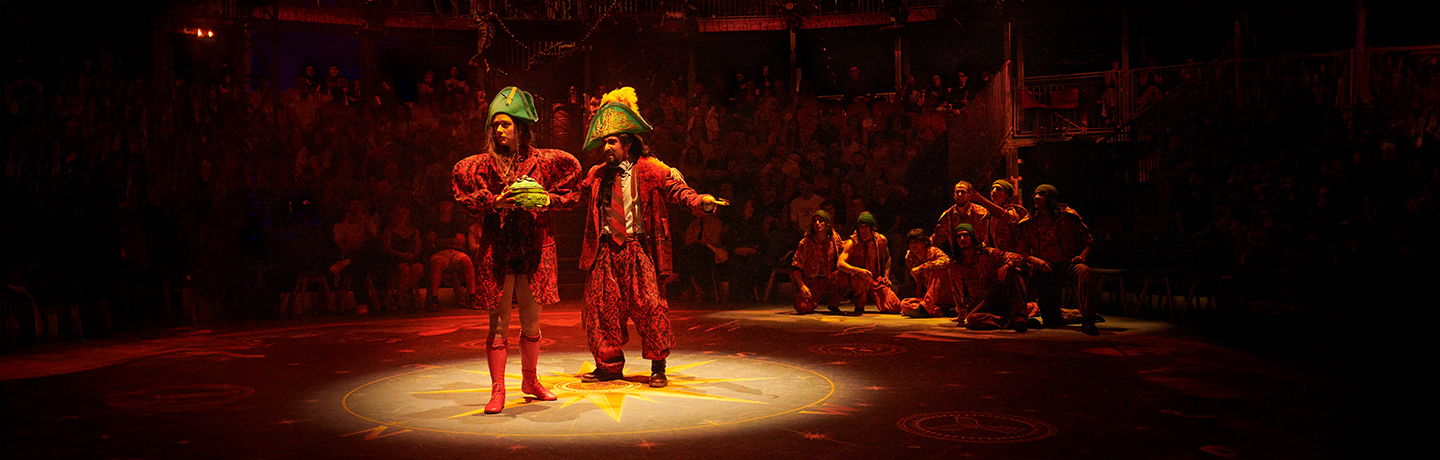
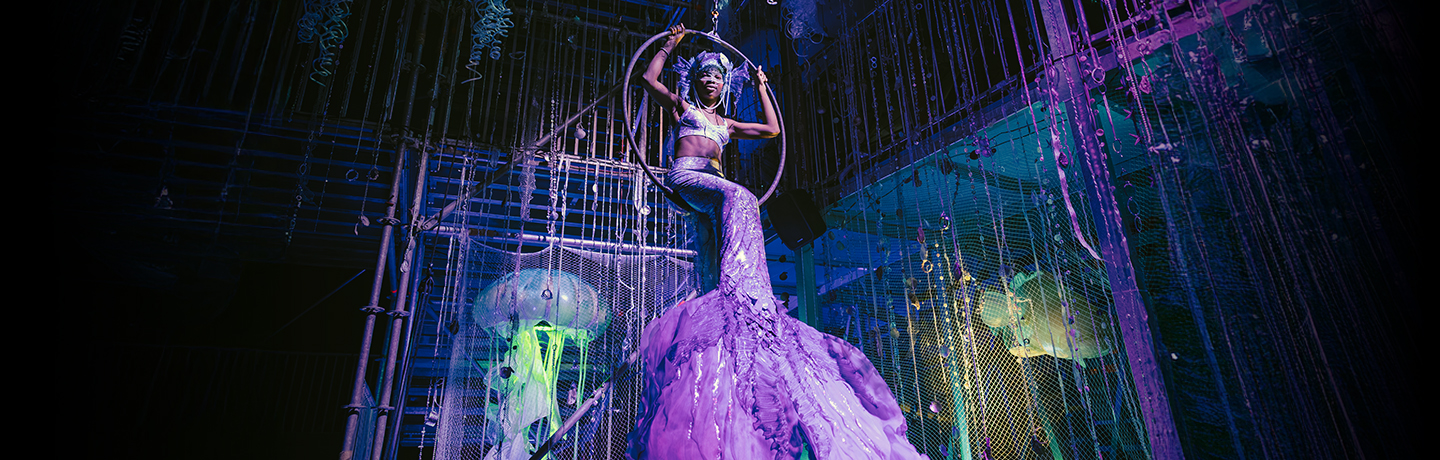
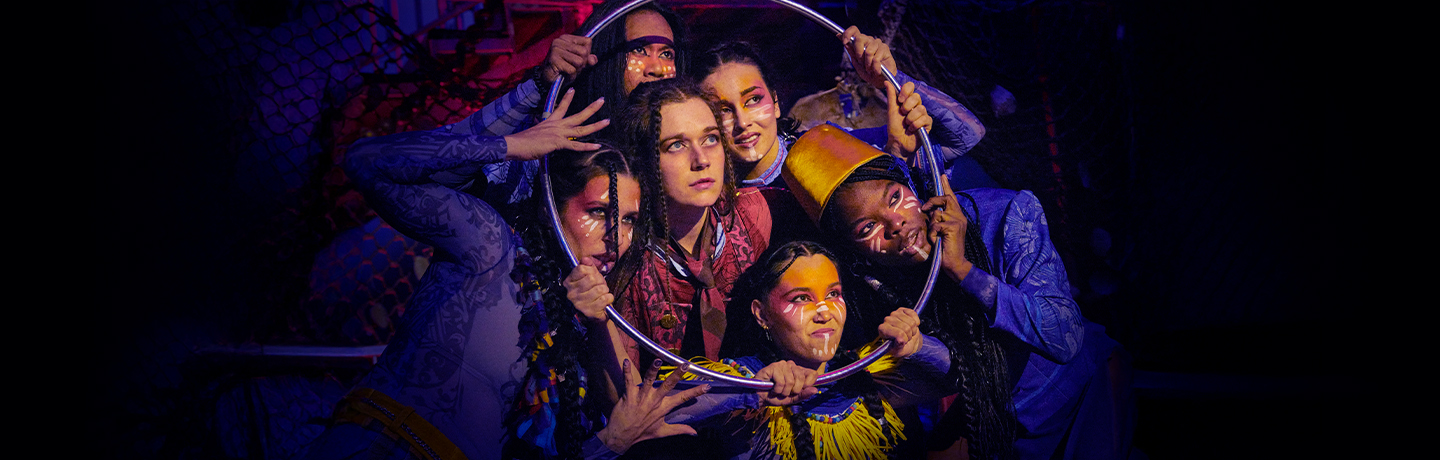
The costumes draw on references from different cultures and geographies that ultimately coexist within the same character: Tibetan elements can sit alongside African, Austrian, Peruvian or Maasai references. The result is something close to a collage, capable of suggesting that we are looking at a community belonging to another world.
Colour is another essential element in that process. The pirates are identified with reds, the Tribe with blues and the Lost Boys with greens. In this way, costume also helps orient the audience, allowing them to begin reading the world through colour before fully understanding its characters.
Designing for Neverland comes with another challenge. The costumes do not just have to define character: they also have to fly.
The performers run, jump, hang and execute highly precise movements, which means every aesthetic decision has to coexist with the technical and safety requirements of acrobatics.
Once again, two different disciplines have to find a way to work together.
Giving Neverland Its Sound
There is another element responsible for expressing what cannot be said in words: music.
Composer John Metcalfe created the show’s original score from what was, almost literally, a blank canvas. Over a career that has seen him collaborate with artists such as Peter Gabriel, Coldplay and U2, Metcalfe has worked across very different musical contexts. In Neverland, however, the composition is constantly shaped by the narrative.
As he explains, the music has to carry love, fear, energy, uncertainty and danger. It has to support the performers and help the audience interpret a story emotionally when that story makes very little use of spoken language.
To find that sound, Metcalfe repeatedly returned to the script, the directors and the performers themselves.
And, above all, to Tempesta.
Because beneath the flights, the pirates and the fantastical creatures is the story of a young woman who has to make decisions about love, loyalty, independence and power. Very human emotions inside an extraordinary world.
An Island Built from Many Worlds
There is something else behind this production that also finds its way into its language.
More than twenty artists, including acrobats, dancers, performers and clowns, take part in a show created by a team bringing together professionals from countries including Spain, Italy, Canada, the United States and the United Kingdom.
For Lulu Helbek, one of the most complex —and at the same time most exciting— parts of the process was finding a common ground between those different performance cultures.
It is not simply about bringing different disciplines together, but about making them all feel as though they belong to the same universe.
That mixture can be found at almost every level of Neverland: in a dramaturgy shaped by theatre and nouveau cirque; in performers who communicate through movement; in acrobatic sequences designed to tell a story; in costumes built from references to different places; and in music that expresses what the characters do not say.
The result is a shared language built precisely from many others.
The Question Behind Neverland
And yet, at its core, the idea behind Neverland is simpler —and perhaps harder to answer— than it might seem:
When do we decide that we have grown up?
For Simone Ferrari, this is one of the central ideas of the show. There are moments when we have to choose which version of ourselves we want to show the world and, in doing so, discover something about ourselves that we did not know before.
Tempesta finds herself facing exactly one of those moments.
Ferrari and Helbek wanted to create a show capable of inspiring wonder, but also of making audiences laugh, feel deeply and even cry. A story that could be shared by children, parents and grandparents, while offering something different to each of them.
Because perhaps that is where the enduring power of Neverland still lies: not simply in the idea of never growing up, but in deciding what we do with all the people we have been along the way.
By the LETSGO Pen, Claudia Pérez Carbonell, on October 14th, 2026