
Revisiting the authority of the “original,” the diversity of media in contemporary adaptation, and how we position ourselves toward its multiple representations.
The Instability of the “Original”
The relationship between cinema and literature — and therefore the question of adaptation — already has a long history within the cultural ecosystem. But what happens when adaptation no longer moves only between novel and screen? Today stories unfold across media as diverse as videogames, graphic novels, theatre, radio, musicals, immersive experiences, theme parks and even websites.
It becomes particularly revealing to observe what happens when several adaptations of the same property coexist in time. The traditional logic — based on an original and its derivatives — begins to destabilize. The relationship between versions is not vertical but lateral: they converse, coexist and are critically evaluated against one another — often according to their degree of “respect” toward the source material.
Linda Hutcheon (2006) proposes understanding adaptation not merely as the passage from novel to film, but as the circulation of an “adapted text” across multiple genres and supports. She defines adaptation as a tripartite process: as product (a resulting work), as process (the act of reinterpretation), and as reception (the audience’s experience). This transcoding does not only involve formal change, but also different ways of engaging the spectator and therefore reshaping reception:
“All [media] are, to different degrees, immersive: some are used to tell stories — like the novel or short fiction — others to show them — like the performing arts — and others allow physical and kinesthetic interaction — like videogames or themed attractions. These three modes of engagement structure what we might call the what, who, why, how, when and where of adaptation.” — Hutcheon (2006)
If every work inevitably dialogues with the historical-cultural framework in which it emerges — with the shared imaginary it comes from — then the notion of an “original” becomes problematic: does a primary work truly exist, or is every version already a rereading that reorganizes the previous ones?
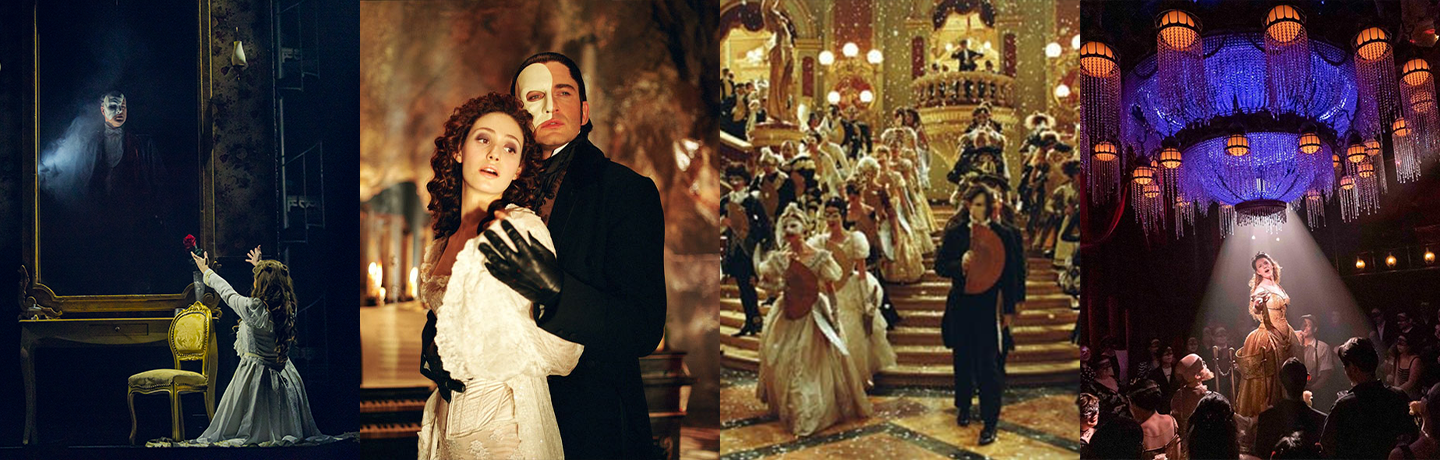
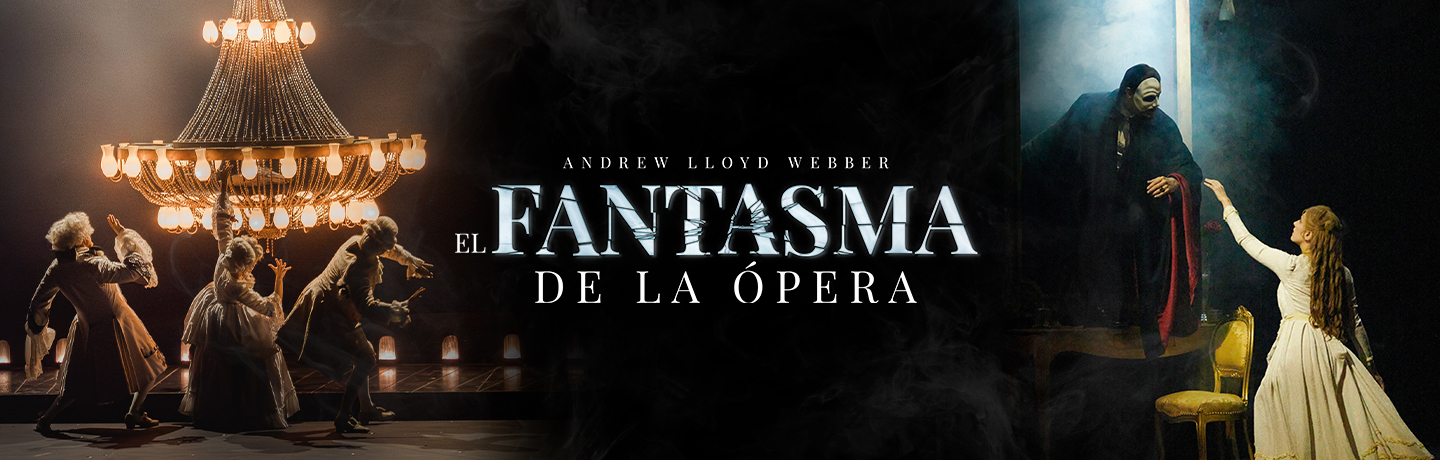
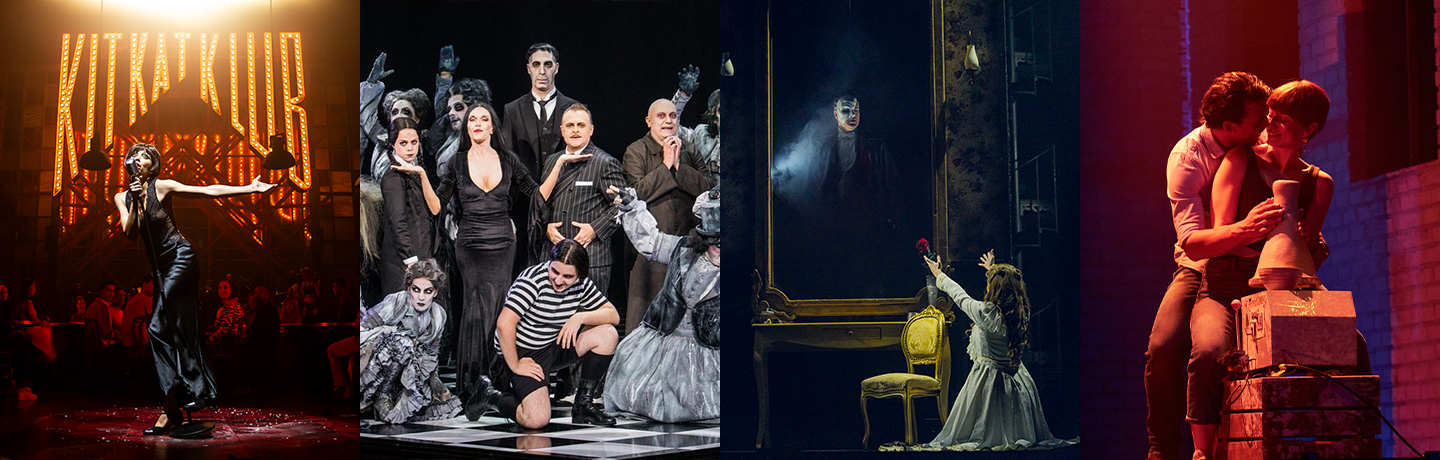
Collage composed of materials from different adaptations of The Phantom of the Opera. Each image remains the property of its legal owners. From left to right: LETSGO musical production; Joel Schumacher movie (2004) and Masquerade the immersive production.
The Question of Authority Again
If each format hosting the same fiction introduces its own way of making it exist, then we are not facing copies of a single object. The work is not the same entity adapting to different supports to complete an original, but a set of manifestations that exist only insofar as they transform one another.
For this reason, contemporary audiences do not consume isolated works but constellations of intercontaminating manifestations. Watching one version does more than complete the experience — it alters it.
At this point, the recurring question appears: should we encounter the original first, and would starting with the adaptation be a kind of sacrilege? Experience shows that order modifies interpretation. Moving in both directions — from original to adaptation and from adaptation back to original — simply reveals how meaning is produced.
Yet the idea persists that any adaptation is a lesser product that must be qualitatively evaluated according to its fidelity to the source. Hutcheon (2006) calls this a critical abuse: the tendency to always measure the adaptation against a supposed prior model. In contemporary practice, however, the opposite frequently occurs — the adaptation becomes the gateway, awakening interest in the so-called original only afterward.
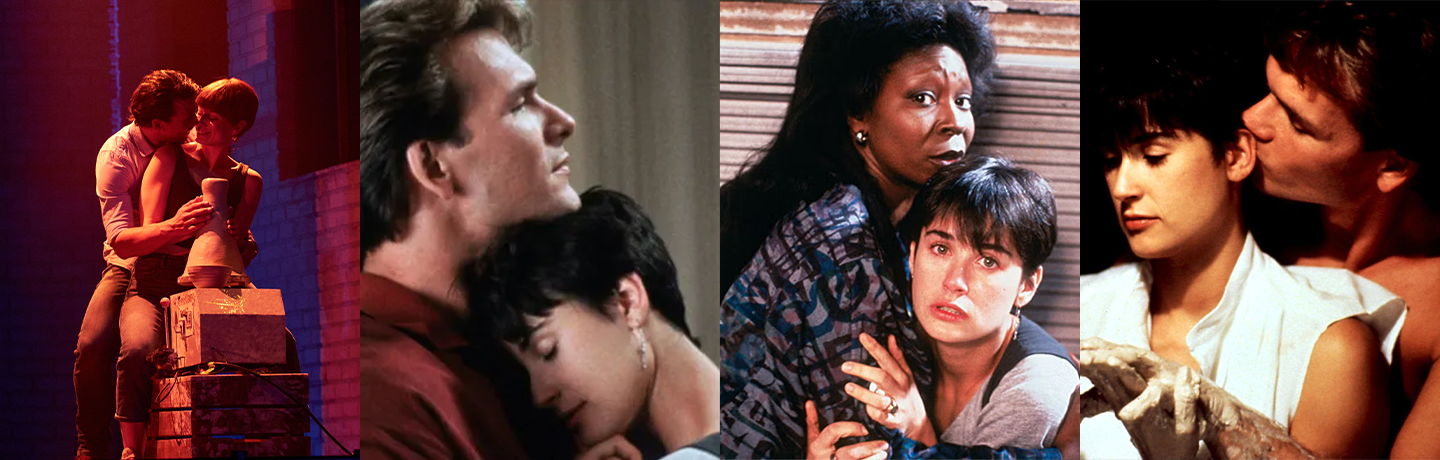
Collage composed of materials from different adaptations of Ghost. Each image remains the property of its legal owners.
Multiplicity of Meanings
The pace of contemporary audiovisual production makes it impossible to traverse every prior source — which, moreover, are not pure but themselves built from previous references. This cycle ultimately questions chronological authority: the earlier work is no longer necessarily the first in the spectator’s experience.
“If we know the adapted work, there will be a constant oscillation between it and the new adaptation we are experiencing; if we do not, we will not experience the work as an adaptation. However, if we read the novel after seeing its film adaptation, we again feel that oscillation, though this time in reverse.” — Hutcheon (2006)
When the “original” has been previously read, we recognize characters before meeting them, anticipate scenes not yet encountered, and reinterpret the past of the story from a later medium.
There is no definitive center to the work because each format displaces meaning toward what it does best: in cinema, the camera defines perspective; in theatre, the stage emphasizes presence; in immersive space, the spectator’s position becomes part of the narrative.
Adaptation, therefore, does not prolong a prior work, it expands it toward new meanings and new kinds of audiences.
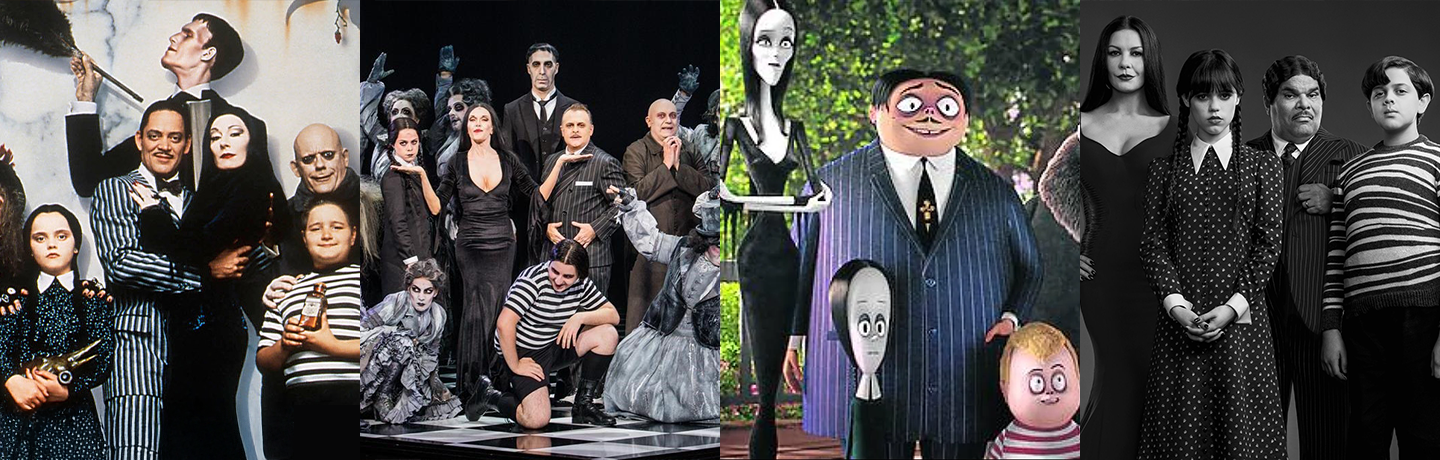
Collage composed of materials from different adaptations of The Addams Family. Each image remains the property of its legal owners.
From Medium to Experience
If each support reorganizes the work according to its strengths, the difference between versions depends not only on the story they tell but on the relationship they establish with the spectator. Each medium adapts not just the plot but our way of inhabiting it.
From here we can clearly observe cases in which a fiction is not transferred from one medium to another but redistributed among them.
When a stage play moves to cinema, for instance, it undergoes a process of de-theatricalization and naturalization (Hutcheon, 2006) in order to activate empathy through a more plausible environment. Film tends to dissolve traditional theatrical signs — declamation, frontal staging, spatial continuity. Shakespearean monologues on screen are therefore stripped of their heightened dramatic charge to activate audiovisual dynamism.
However, the movement is not unidirectional. Some filmmakers deliberately reinscribe theatre within the image. In the work of Pedro Almodóvar, the artificiality of décor, chromatic stylization and performativity of gesture reveal an awareness of representation rather than a search for realism. The same occurs in the filmography of Wes Anderson: his compositions resemble stage sets, character movements function almost as choreography, and the often artificial, detailed scenography evokes theatrical scenery.
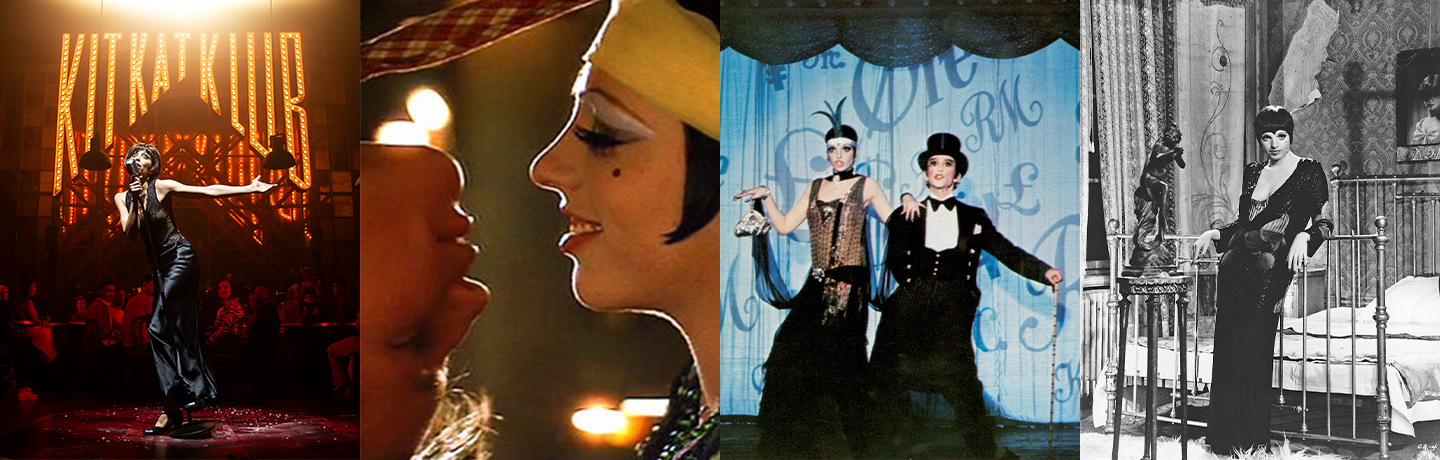
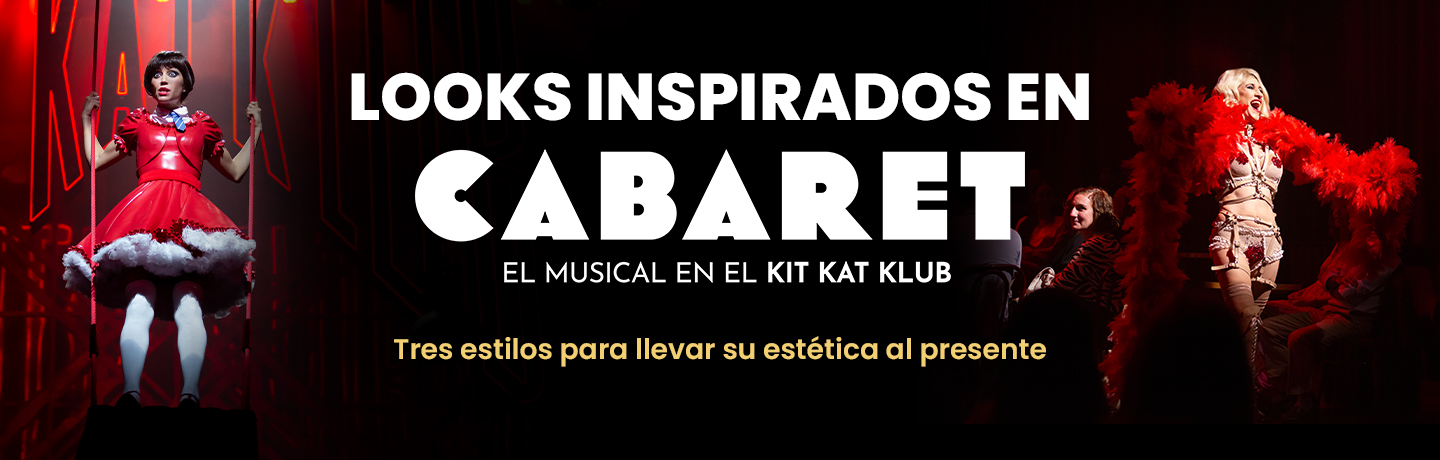
Collage composed of materials from different adaptations of Cabaret. Each image remains the property of its legal owners.
From Theory to Experience: How Works Circulate Today
The question is no longer how a work passes from one medium to another, but how the same imaginary distributes itself across experiential devices. Each support reorganizes the work according to its possibilities: theatre reconstructs presence and corporeality; cinema fixes gaze and temporality; immersive experiences place the spectator inside the narrative, making position itself a narrative element.
In our own productions, this logic of resignification becomes evident. Cabaret, for example, has undergone a process of modernization affecting staging, costume and character construction: fabrics, silhouettes and performative codes have been updated to create an immersive experience that engages the audience in a completely new way. This version should not be measured against the original musical; it is a different work that reappropriates its imaginary.
The Phantom of the Opera, meanwhile, reinterpreted its central narrative through music, lyricism and staging, softening and romanticizing the obsession and jealousy defining the protagonists’ relationship. This process of resignification reaches a new level today with Masquerade, the immersive adaptation presented in New York: by plunging the audience directly into the carnival world, introducing additional scenes and interactive scenography, the experience transforms the familiar story into something expansive, demonstrating that adaptation does not replicate but multiplies and recontextualizes meaning.
This logic also applies to stage adaptations of stories born outside the theatre. The shift from screen to stage necessarily entails a reconfiguration of language: Ghost moves an intimate cinematic drama into a musical convention where emotion must materialize through presence, choreography, and score, while The Addams Family turns an originally audiovisual and serial imaginary into a dramaturgy that depends on the simultaneity of stage space and performative gag. In both cases, the aim is not to reproduce the previous work, but to translate its operating mechanism into a medium governed by different perceptual rules.
When narratives move into immersive formats — such as experiences based on Jurassic World, Avatar, Stranger Things or Squid Game — the shift is even more radical. The spectator no longer merely receives fiction but becomes an agent within it. Narrative transforms according to interaction, movement and individual perception, reaffirming that meaning does not reside in a stable “original” but in the relationship each medium constructs with its participant.
Every adaptation is a new reading
Contemporary adaptation ultimately exists between two tensions: the purist view demanding absolute fidelity to the “original,” and the reception that understands each version as a new work — a singular reading shaped by the experience of both creator and audience. In this framework, musicals such as Cabaret or The Phantom of the Opera, as well as immersive experiences like Masquerade, are not merely reinterpretations but autonomous works that dialogue with their source while expanding and resignifying it. Each adaptation generates new meanings, explores new modes of engagement and displaces prior authority: there is no longer a single center, but a lateral field of possibilities where creativity and reception meet, and where meaning is collectively constructed across the formats and experiences that coexist.
By the LETSGO Pen, Claudia Pérez Carbonell, on February 20th, 2025