
LETSGO reinterprets the classic in an immersive format. Here are five reasons why you shouldn’t miss this production.
Cabaret is, without a doubt, one of the most frequently staged musicals in the genre. At this point, the question is no longer how to present it, but how to reinterpret a title so deeply embedded in the cultural imagination. Over the years, different productions have explored varying degrees of fidelity, stylization, and political weight, with uneven results.
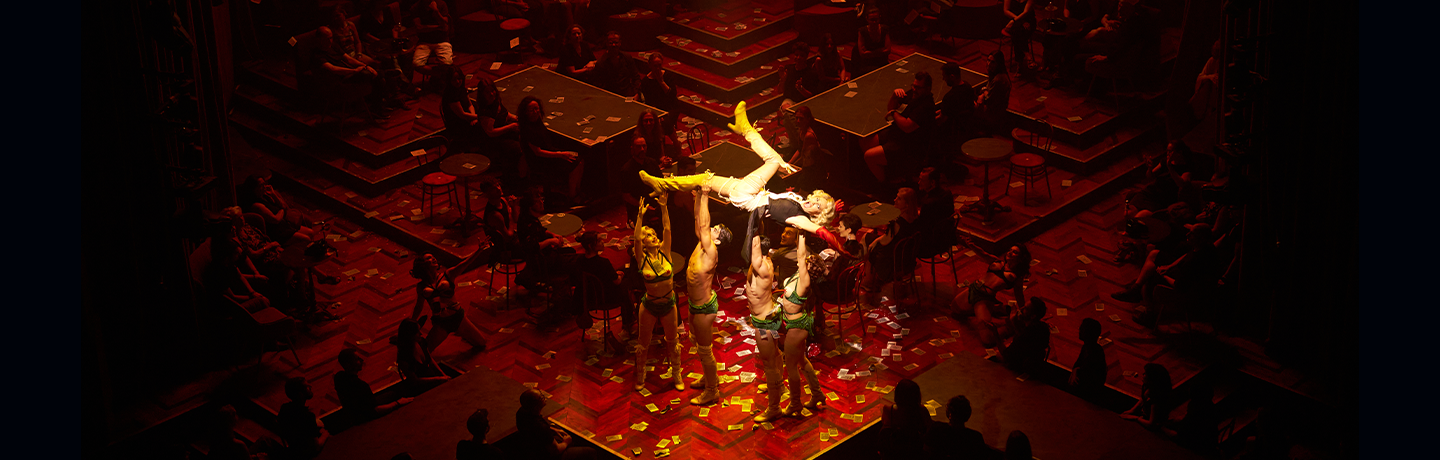
LETSGO’s proposal, however, sets out to explore new forms of theatrical language. Its arrival at the UMusic Hotel transforms the Kit Kat Klub into something more than a performance space, adopting a more ambitious approach that pushes the traditional boundaries between actors and audience, effectively dissolving the fourth wall.
Rather than functioning as a conventional revival, the production embraces an immersive format that disrupts the usual dynamics of spectatorship. The audience does not simply attend a performance, but enters a constructed environment that evokes Weimar-era Berlin and extends its narrative beyond the stage. In this context, elements such as the preshow, spatial design, and even the possibility of eating and drinking during the performance become structural components of the experience.
These are five reasons to understand why this version of Cabaret operates on a different level —and how it is best approached as a spectator.
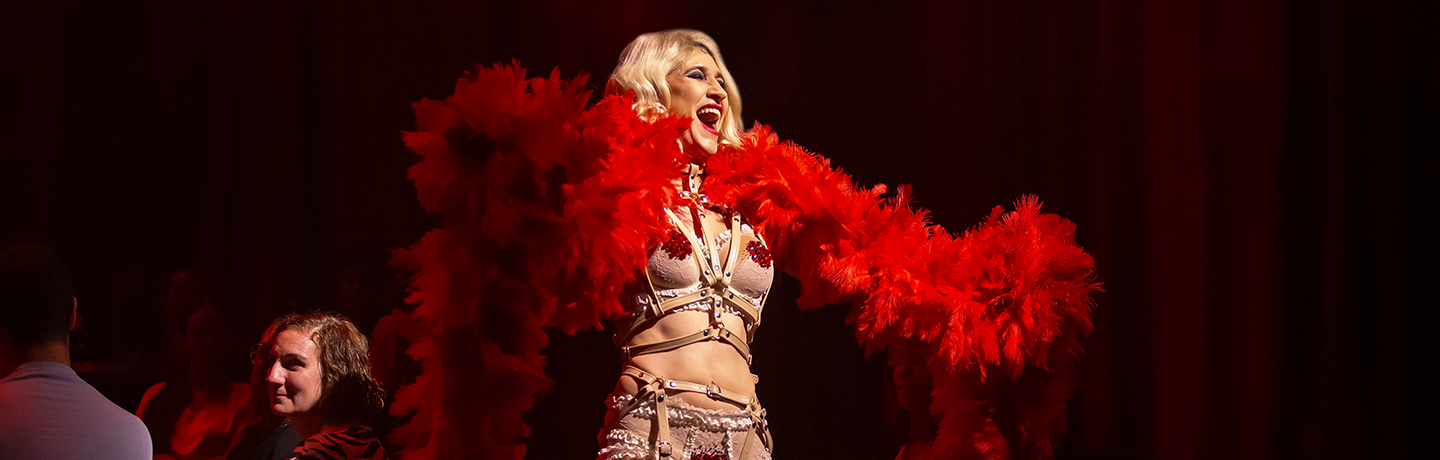
Abril Zamora as the Emcee.
1. Because you don’t enter a theatre, but a period in time
One of the most evident shifts in this production lies in the way the audience enters the experience. Access to the Kit Kat Klub acts as the first narrative device the spectator encounters.
Before the show officially begins, the audience has already been immersed in an environment that evokes the nightlife of Weimar-era Berlin.
At this stage, the preshow functions as an extension of the production itself, where live music, performer movement, and spatial activation establish a different mode of engagement. The experience unfolds gradually, almost imperceptibly.
The result is a clear shift: the spectator no longer occupies an external position. By the time the main narrative takes shape, they are no longer observing from the outside, but have already been absorbed —at least partially— into the logic of the Kit Kat Klub.
2. Because the Kit Kat Klub is an active space
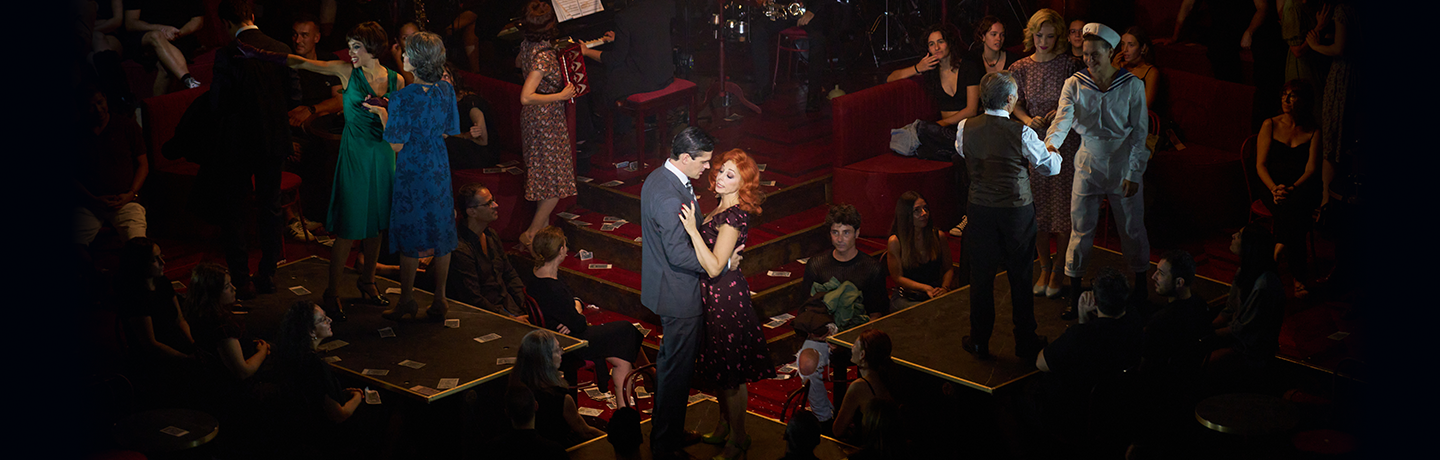
The Kit Kat Klub operates as more than a backdrop; it actively shapes how the experience unfolds. The spatial layout, the proximity of performers, and the absence of a clear division between stage and audience transform the conventional perception of theatre.
Within this context, elements such as the possibility of eating or drinking during the performance are not external additions, but integral parts of the overall device. The experience is not structured solely around what happens on stage, but also around what takes place around it —in the margins and among the audience itself.
This creates a particular dynamic: the spectator does not simply observe, but shares the same space of action, where the boundary between performance and social interaction becomes increasingly blurred.
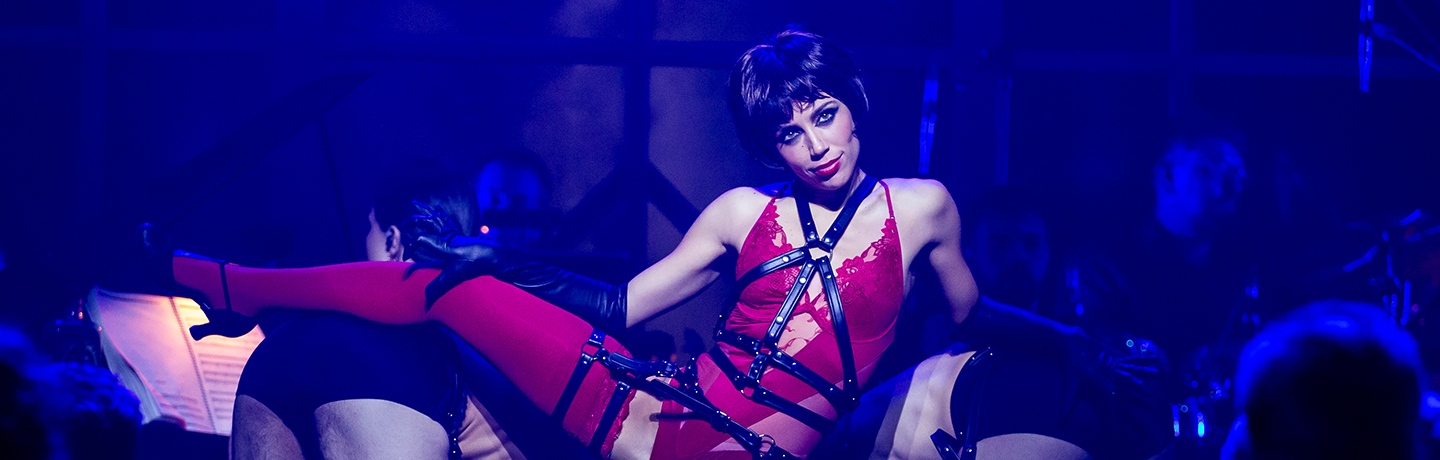
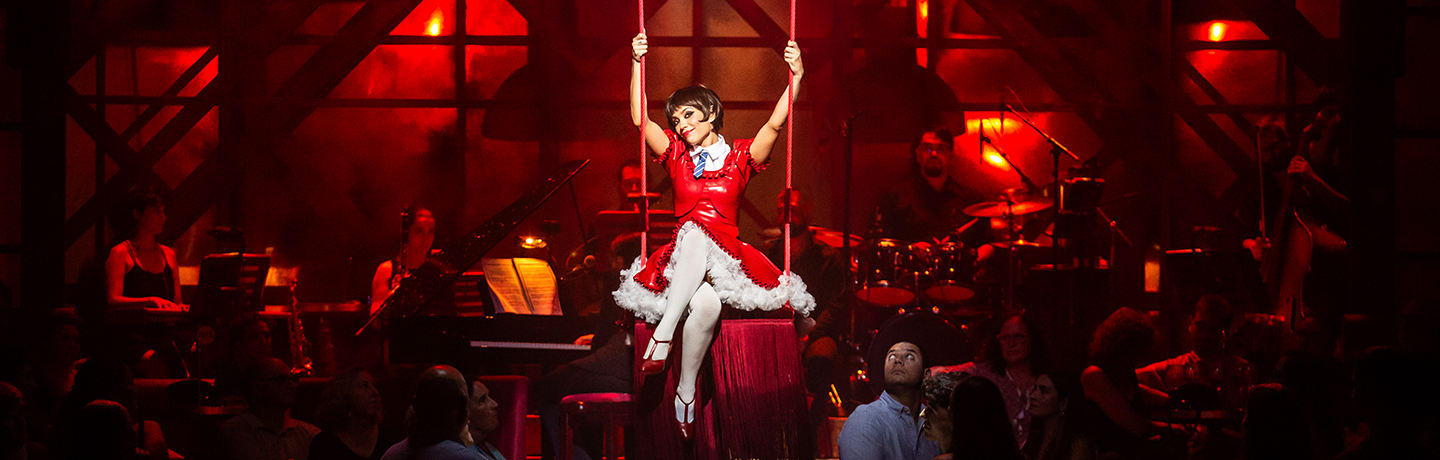
Amanda Digón as Sally Bowles.
3. Because it reinterprets the material rather than simply reproducing it
The defining feature of this version of Cabaret is its immersive format, which significantly alters the traditional configuration of theatrical space.
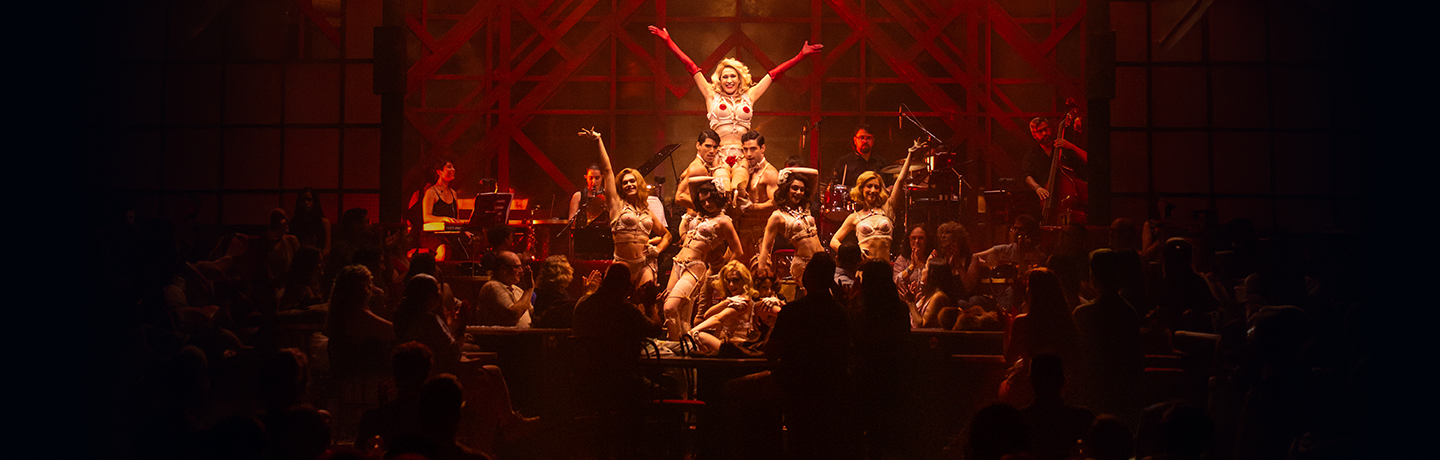
There is no conventional stage that clearly defines where the action takes place. Instead, a new spatial arrangement is created in which part of the audience shares the same physical plane as the performers.
The space is structured through tables and circulation areas surrounding the action, allowing actors to move among the spectators and interact with them directly.
This design effectively removes the traditional separation between stage and audience. The spectator no longer experiences the show from a single perspective; instead, their perception shifts depending on where the action unfolds.
The result is an experience in which attention is no longer guided by a single focal point, but by proximity, movement, and direct interaction with what is happening around them.
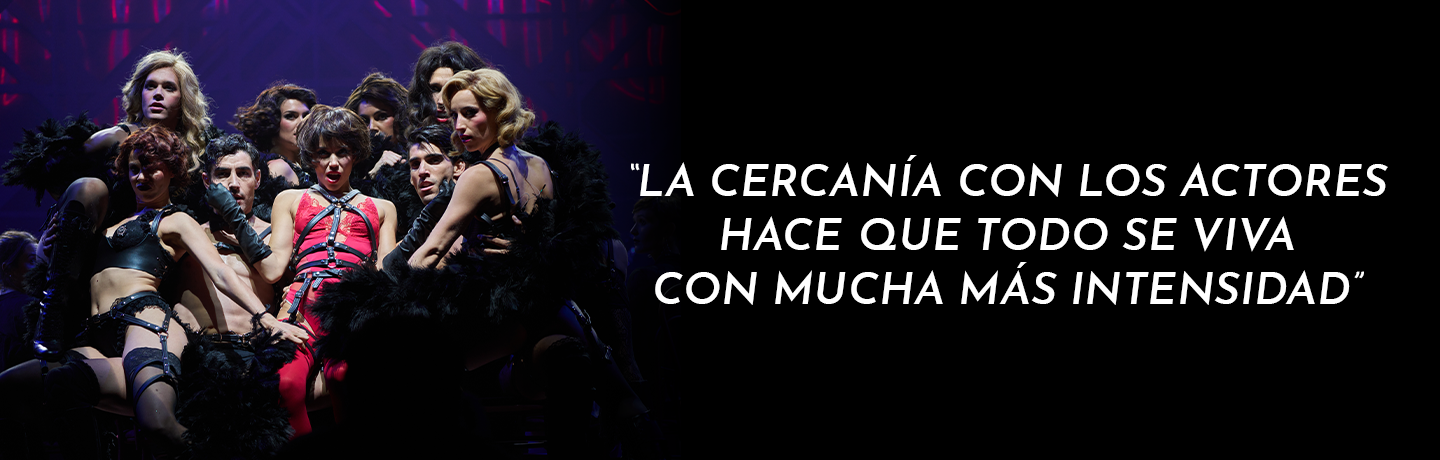
— Audience reviews.
4. Because the cast is one of the production’s biggest revelations
In a format where the action takes place literally among the audience, the performers face particularly demanding conditions. There is no stage to provide distance or protection. Performance is built in direct contact with spectators, who perceive every detail —acting, costume, makeup— at close range and in constant motion.
Within this context, Amanda Digón’s Sally Bowles stands out for a combination of fragility and irreverence that resonates both with the character’s legacy and with the logic of this production, where she seems to exist in a constant state of instability.
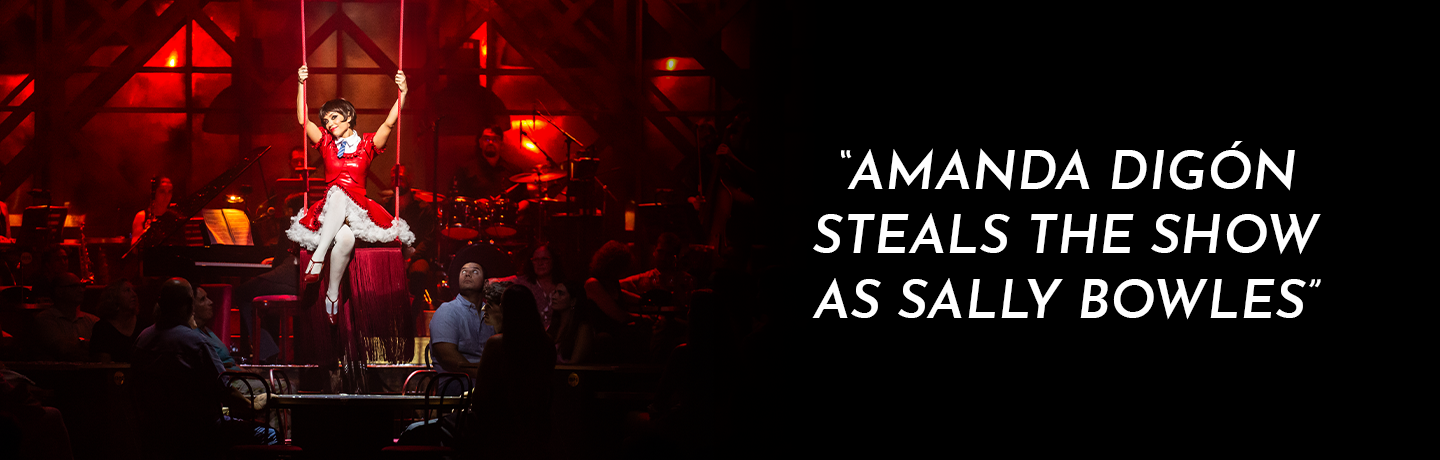
— Audience reviews.
A similar effect can be seen in Abril Zamora’s Master of Ceremonies, a presence that shapes the Kit Kat Klub without needing a fixed position, moving fluidly between provocation and discomfort.
The result is a cast that does not merely support the production, but sustains it from within, giving it form in the very same space occupied by the audience.
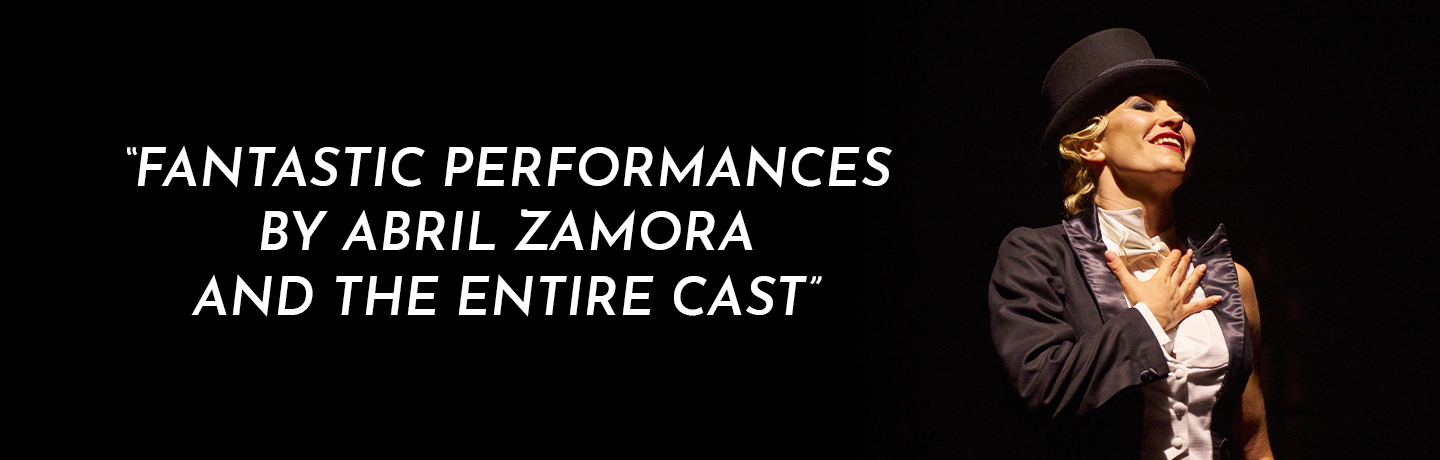
— Audience reviews.
5. Because Cabaret still speaks to the present
Beyond its immersive format or the proximity to the audience, Cabaret continues to rely on the same core that has ensured its longevity: the portrayal of a specific historical moment —the Weimar Republic and the rise of Nazism— filtered through the lens of nightlife entertainment.
In this sense, the Kit Kat Klub becomes a point of access to that world, not through a museum-like reconstruction, but through an aesthetic of decadence already embedded in the original material. The party, the music, and the excess function as part of an environment in which the political gradually surfaces.
It is precisely this tension between the playful and the unsettling that keeps the piece relevant.
And it is here that the experience extends beyond the performance itself: in the quiet discomfort of recognizing that what unfolds on stage does not belong entirely to the past.
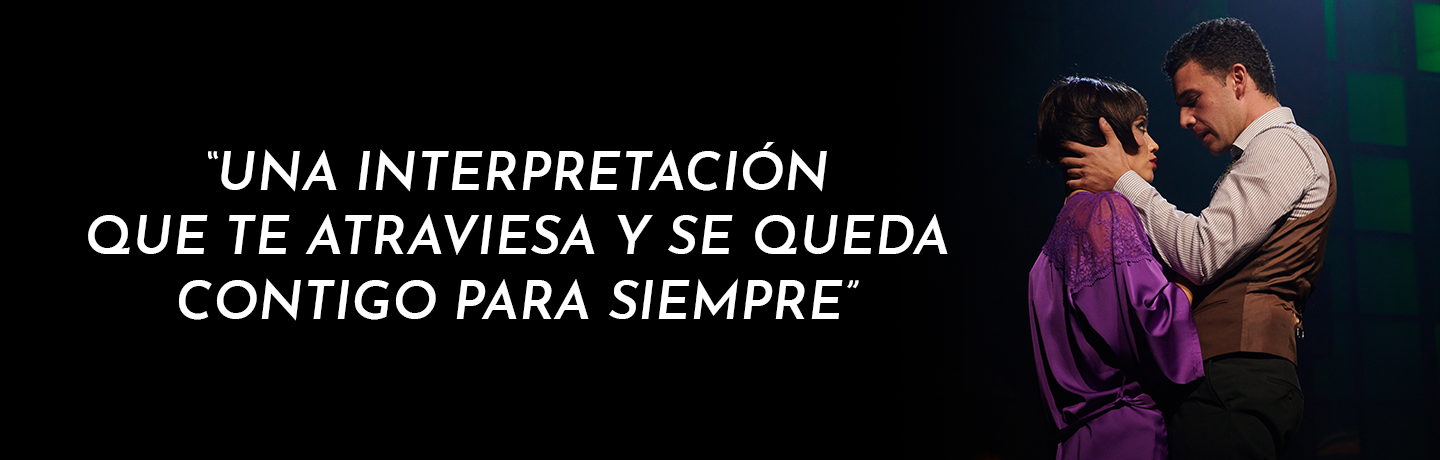
— Audience reviews.
By the LETSGO Pen, Claudia Pérez Carbonell, on April 9th, 2026